
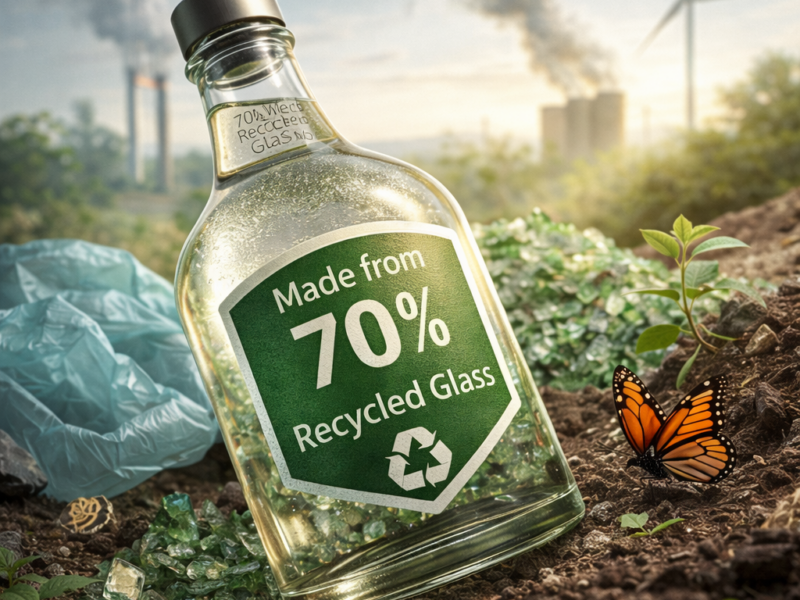
The global wine and spirits glass bottles industry in 2026 stands at a critical juncture, transitioning from a historical reliance on physical mass and traditional ornamentation to a new paradigm defined by “Quiet Luxury,” Circular Economy Compliance, and sLeveraging Lightweighting.
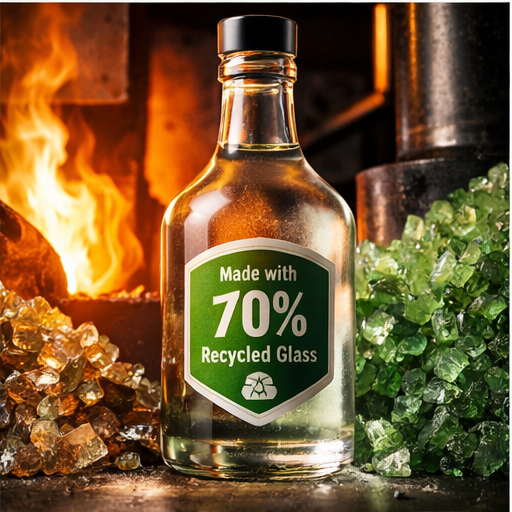
The Quantifiable Rise of Glass bottles: Premiumized Sustainability
The global alcoholic beverage packaging market exhibits a robust trajectory, projected to grow from $81.64 billion in 2025 to $87.2 billion by 2026, representing a compound annual growth rate (CAGR) of 6.8%. This expansion is driven by the consistent premiumization of spirits and wine, particularly in the Asia-Pacific and North American regions. Specifically, the alcoholic beverage glass packaging segment is forecasted to expand from $45.8 billion in 2026 to $64.91 billion by 2035, maintaining a steady CAGR of 3.65%. Within this landscape, the demand for glass remains paramount in the spirits sector, which is expected to reach a market size of $160.53 billion in 2026. In Australia, the container glass market is estimated at 1.49 million tonnes in 2026, while Thailand’s market is projected to reach $4.12 million tonnes, buoyed by tourism recovery and a shift away from mass-market PET toward premium glass.
| Market Metric | 2025 Value | 2026 Forecast | 2031/2035 Target |
| Global Alcoholic Beverage Packaging Market | $81.64 Billion | $87.2 Billion | $114.98 Billion (2030) |
| Global Spirits Market Size | $152.94 Billion | $160.53 Billion | $200.49 Billion (2035) ) |
| Global Alcoholic Beverage Glass Packaging | $44.06 Billion | $45.80 Billion | $64.91 Billion (2035) |
| Australia Container Glass Market Volume | $1.47 Million Tonnes | $1.49 Million Tonnes) | $1.59 Million Tonnes (2031) |
| Thailand Container Glass Market Volume | $3.95 Million Tonnes | $4.12 Million Tonnes ) | $5.09 Million Tonnes (2031) |
Growth in the 2026 period is further nuanced by regional demographic shifts and the rise of alternative formats that challenge glass’s traditional dominance. For example, while glass remains “king” for premium perception, ready-to-drink (RTD) cocktails are projected to grow by $16.2 per year through 2030, creating a massive secondary demand for small-batch, lightweight glass bottles that signal authenticity. In Southeast Asia, particularly Vietnam, wealthy urban professionals are increasingly upgrading from traditional beverages to imported spirits and premium lagers, driving the alcoholic drinks market toward a valuation of $15.06 billion by 2032. Conversely, the Australian wine industry faces an inventory surplus of $2.06 billion liters, forcing a strategic shift toward high-value exports that require distinctive, high-quality glass packaging to differentiate on the international stage.
The underlying causal relationships in this data suggest that the “volume-to-value” ratio is becoming the primary metric for packaging success. While the total volume of glass (in tonnes) grows moderately at $3.24 to $3.42 CAGR globally, the revenue growth outpaces volume as brands invest more in decorative techniques, anti-counterfeiting features, and sustainable material documentation. The fastest-growing color segment globally is amber glass, growing at $4.92 in markets like Thailand due to its necessity in shielding UV-sensitive craft beers and nascent cannabis-infused beverages. Meanwhile, the pharmaceutical sector’s consolidation around injectable delivery systems is creating a shortage of pharma-grade borosilicate tubing, which indirectly increases the competition for furnace space and raw materials available for high-end spirits bottles.
The Technical Intersection of New Glass Bottles

In 2026, the professional interpretation of these market facts reveals a “Quiet Luxury” revolution where sustainability, tactility, and accessibility serve as the primary indicators of premium value. The historical equation that equated heavy glass with high quality is being fundamentally rewritten; industry initiatives like the Sustainable Wine Roundtable’s Bottle Weight Accord aim to reduce the average 750ml still wine bottle weight to below 420g by the end of 2026. This “Lightweight Luxury” trend is exemplified by breakthroughs like Ardagh’s 300g wine bottle and Johnnie Walker’s 180g whisky bottle, which use aerodynamic, optimized silhouettes to maintain aesthetic impact while reducing carbon emissions by over 30%. For beverage traders, the impact on specific packaging elements is profound: lighter glass allows for more units per pallet, significantly lowering freight emissions and logistics costs in a market where energy-driven cost fluctuations have become a permanent reality.
The regulatory landscape, particularly in Europe and North America, is now the dominant force shaping packaging engineering. The EU’s Packaging and Packaging Waste Regulation (PPWR), which becomes legally binding on August 12, 2026, mandates that all packaging be recyclable and introduces an almost complete ban on PFAS in food-contact materials. Furthermore, by 2030, the PPWR will prohibit packaging designed only to increase perceived volume—such as false bottoms—which will force a redesign of many traditional luxury spirits bottles. In the United States, EPR laws in states like California, Colorado, and Oregon are implementing “eco-modulated” fee structures, where producers are charged higher rates for hard-to-recycle materials, essentially taxing traditional heavy glass and non-recyclable decorative coatings.
| Regulatory Framework | Implementation Date | Key Impact on Glass Packaging |
| EU PPWR (Reg 2025/40) | Aug 12, 2026 | Mandatory recyclability grades; ban on PFAS; mandatory material pictograms. |
| US EPR (California SB 54) | Jan 1, 2027 | Plastic reduction targets; mandatory producer responsibility for all materials. |
| Australia NPTs | 2026 | Goal of 100% reusable/recyclable/compostable; 50% average recycled content. |
| US EPR (Colorado/Oregon) | 2025-2026 | Fee payments and full compliance started; eco-modulation in effect.v |
Design trends are shifting from visual excess to multi-sensory engagement. As digital purchasing grows, the physical touch of a bottle has become a critical “dopamine” moment for consumers, driving demand for deep embossing, matte coatings, and “imperfect” glass finishes that mimic heritage craftsmanship. Inclusive design is also moving from a niche consideration to a central pillar, with “Universal Design” features like ergonomic neck grooves and high-contrast, legible labeling serving an aging population while maintaining a minimalist aesthetic. Smart packaging technology is being integrated directly into these designs; the use of NFC tags and QR codes allows brands to provide sourcing transparency, anti-counterfeiting authentication, and immersive digital storytelling at the point of consumption. For beverage traders, these “dynamic digital gateways” offer real-time feedback loops and consumer data that were previously inaccessible through traditional retail channels.
Innovation and Resilience
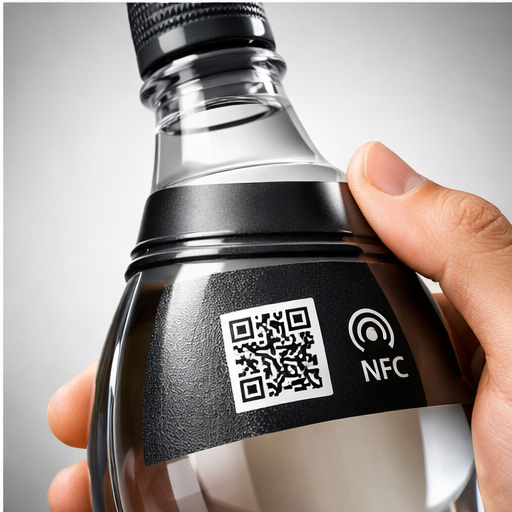
For Shandong Valiant Packaging, the 2026 trends necessitate a strategic transition from being a high-volume manufacturer to a “Solution Provider” that integrates sustainability and technology into every vessel. Valiant’s vertically integrated model—combining mold manufacturing, stock production, and custom decoration—is uniquely suited to help global brands navigate the convergence of regulatory compliance and “Lightweight Luxury”. The company’s ISO 14001 and FSSC 22000 certifications are essential trust signals for eco-conscious consumers and provide the documentation needed for EU and US market entry. Strategic recommendations include the expansion of “Customer Concept Workshops” where CAD 3D visualization and rapid prototyping can be used to co-create “right-weighted” bottles that fulfill both aesthetic and carbon-reduction goals.
The Future of Earth
We all care about the future of Earth. We are doing something new so that we can help solve the problem. Valiant hopes people can find a solution that benefits both humanity and the Earth. That is what we try our best to achieve.