
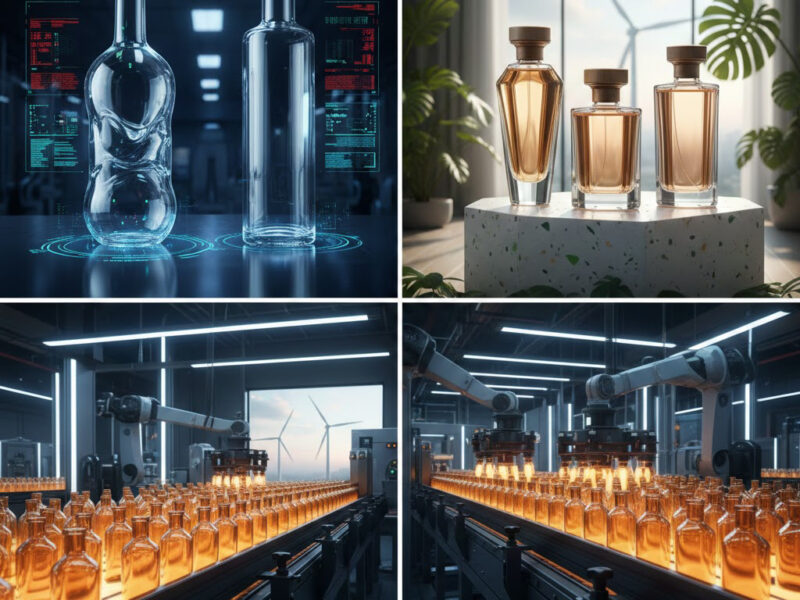
The global glass packaging industry is currently standing at a critical juncture, transitioning from traditional paradigms of “quality through mass” toward a sophisticated future defined by “Lightweight Luxury” and “Quiet Luxury”. This strategic evolution is catalyzed by the Narrow Neck Press and Blow (NNPB) technology, a manufacturing innovation that allows for significant glass weight reductions—ranging from 14% to 33%—while maintaining or even enhancing the structural performance of containers. As we approach 2026, the industry faces converging pressures from rising energy costs, which now account for 18% of production expenses, and stringent regulatory mandates such as the Sustainable Wine Roundtable’s Bottle Weight Accord, which aims to reduce the average weight of 750 ml still wine bottles to below $420 by late 2026. This report examines the technical mechanisms of NNPB, its transformative impact on packaging design and sealing technologies, and its role in fostering a circular economy. For Shandong Valiant Packaging, the adoption of NNPB is not merely a technical upgrade but a foundational strategic pillar for achieving climate resilience and market leadership in the high-value spirits and wine segments across the Americas, Europe, and the Asia-Pacific.
Global Market Data and the Economic Necessity of Lightweighting
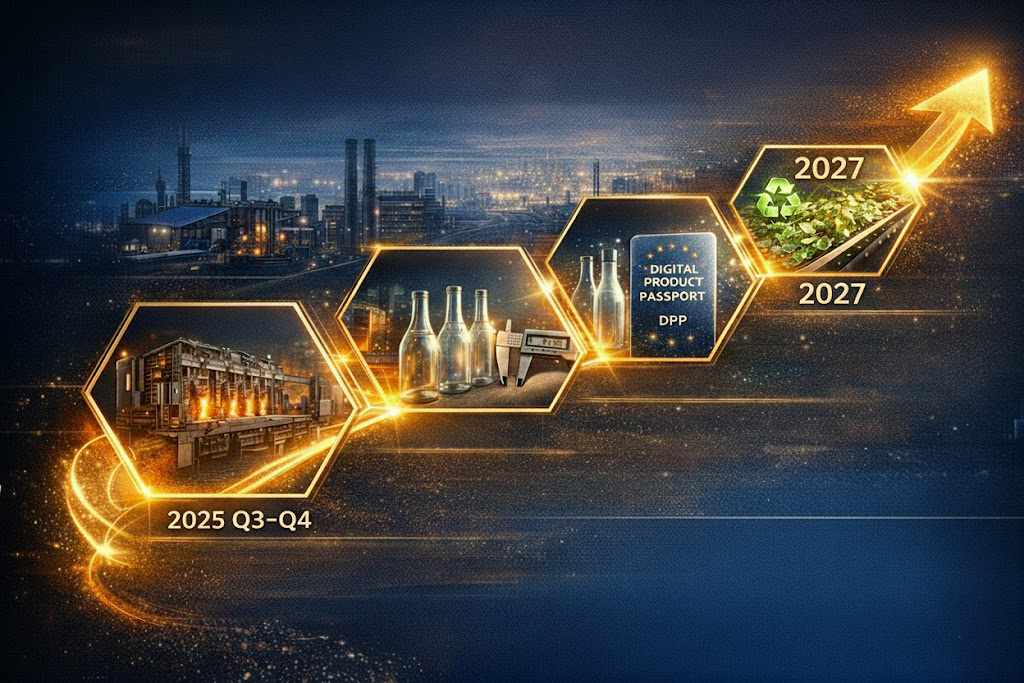
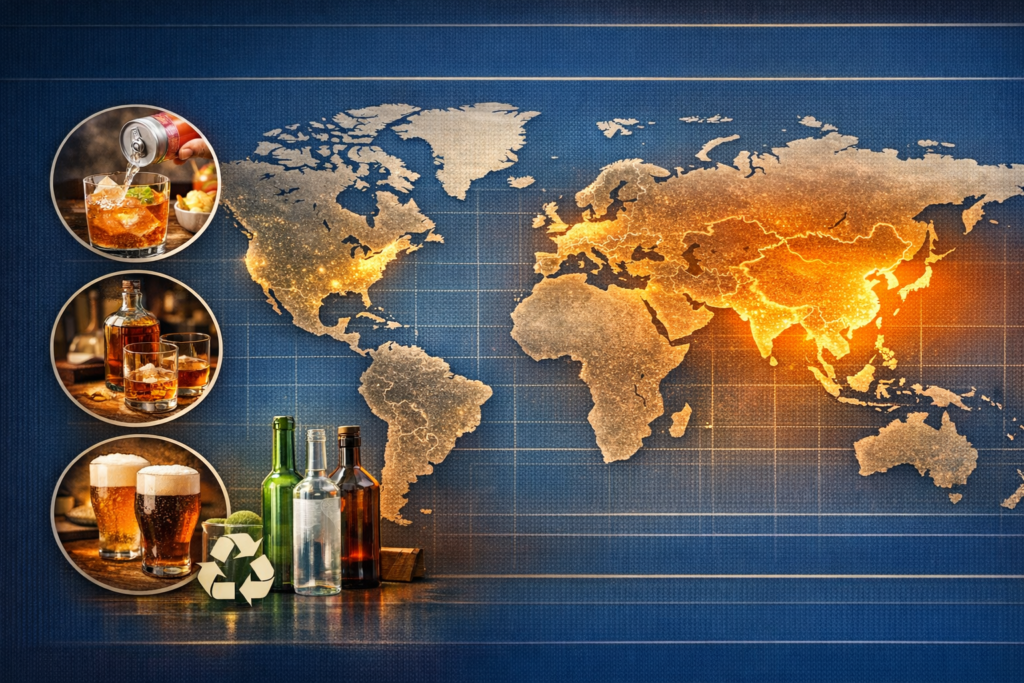
The economic landscape for the alcoholic beverage packaging sector is defined by steady growth tempered by extreme operational volatility. Current market analysis projects the global glass bottles and containers market to expand from $84.21 million tonnes in 2025 to $103.06 million tonnes by 2031, representing a CAGR of 3.42%. In terms of value, the retail glass packaging market is expected to reach USD $77 billion by 2032, driven by a 5.3% CAGR. The alcoholic beverage segment remains the primary engine of this growth, commanding approximately 46% to 51% of the total glass container market share. However, the industry is grappling with record-high energy prices, particularly in the United Kingdom and Europe, where electricity price spikes in 2024 compelled manufacturers to idle production lines during peak tariffs. Furthermore, glass containers are approximately 25% more expensive to transport than plastic or aluminum alternatives due to their weight and fragility. This has led to a plateau in growth for economy lines, as major breweries increasingly trial lightweight rPET, which weighs nearly 90% less than glass. The response from the glass sector has been a rapid pivot toward “Rightweighting”—a responsible reduction in material use that directly offsets logistics costs and energy-related carbon emissions. Regionally, the Asia-Pacific dominates with a 36.37% market share, while China leads global growth with a 6.1% CAGR, driven by the urban shift toward premium craft spirits and a robust recycling ecosystem.
Evolution of Packaging Elements
The transition from the Blow and Blow (BB) process to Narrow Neck Press and Blow (NNPB) technology represents the most significant leap in glass container manufacturing since automation began. The fundamental limitation of the BB process is its reliance on air pressure to form the internal cavity of the parison, which often results in uneven glass distribution and the presence of a “settle wave”. NNPB addresses this by using a long, thin metallic plunger to mechanically press the molten glass into the blank mould, ensuring a uniform wall thickness and eliminating the settle wave. Technical studies demonstrate that when minimum thicknesses are held constant, NNPB allows for a 14% weight reduction in a standard 330ml bottle compared to BB. More importantly, at identical average weights, NNPB bottles exhibit significantly lower stress levels. For instance, internal pressure stress indices are reduced by 2% to 21%, and vertical load stress indices are 14% to 17% lower than BB ware.
These technical advantages translate into profound shifts in specific packaging elements. In terms of design, NNPB enables “Lightweight Luxury,” where high-end brands can adopt sophisticated, optimized silhouettes that reduce carbon footprints without sacrificing the premium aesthetic. By 2026, tactile design will become a critical “dopamine” moment for consumers; NNPB’s precision allows for deep embossing and “imperfect” glass finishes that mimic heritage craftsmanship while maintaining structural integrity. Labeling is also evolving, with a shift toward “Universal Design”—inclusive, high-contrast, and hyper-legible labels that cater to an aging population, integrated with AI-enabled QR codes for digital storytelling. Sealing technologies are similarly impacted; while screw caps provide a hermetic, TCA-free seal that is 100% recyclable and highly consistent, NNPB’s superior control over neck formation ensures that even ultra-lightweight bottles can support premium cork closures or innovative anti-drip rings like the Specialty Sommelier™ range.
Structural Performance Comparison: NNPB vs. BB
| Metric | Blow and Blow (BB) | NNPB (Identical Weight) | NNPB (14% Lighter) |
| Wall Thickness Uniformity | Moderate (Settle Wave) | High (Uniform) | High (Uniform) |
| Internal Pressure Stress | Baseline (100%) | 79% – 98% | 101% – 109% |
| Vertical Load Stress | Baseline (100%) | 83% – 86% | 104% – 107% |
| Heel Region Stress | High | 21% Reduction | Managed |
| Raw Material Usage | 100% | 100% | 86% |
Strategic Implications for Shandong Valiant Packaging
For Shandong Valiant Packaging, the global surge in demand for lightweight, sustainable glass packaging presents an unprecedented opportunity to leverage its vertical integration and R&D capabilities. As a company providing everything from mold manufacturing to custom bottle decoration, Valiant is uniquely positioned to offer end-to-end NNPB solutions. To capitalize on the predicted growth of the sustainable packaging market—which is expected to reach USD $552.45 billion by 2033 with an 8.3% CAGR in Asia-Pacific—Valiant must align its manufacturing operations with the four pillars of its mission: Knowledge, Action, Care, and Impact.
Strategic recommendations include:
- Investment in Advanced NNPB Tooling: Valiant should prioritize the development of high-durability plunger alloys and optimized cooling systems. Given that NNPB increases glass pressure by 300% in narrow-neck formats, specialized mold designs are essential to prevent micro-checks and mold wear.
- Implementation of “Climate Resilient” Production: By adopting the NNPB process, Valiant can directly support its goal of reducing its carbon footprint through decarbonization and energy efficiency. Each 10% increase in cullet usage, coupled with NNPB’s reduced material requirement, can yield a 5% reduction in CO2 emissions and a 2-3% drop in energy consumption.
- Expansion of the “Lightweight Luxury” Portfolio: Valiant should develop a range of ultra-lightweight wine and spirit bottles (e.g., 750ml bottles weighing <420g) targeted at the Americas and European markets to meet 2026 sustainability targets.
- Integration of Smart Packaging and Decoration: Leveraging in-house capabilities like screen printing and hot foil stamping, Valiant can enhance the perceived value of lightweight bottles through tactile storytelling and AI-integrated labels, ensuring that “lightweight” is never equated with “low quality”.
By mastering the NNPB process, Valiant can deliver products that are not only 14-33% lighter but also exhibit superior internal pressure resistance, making them ideal for the burgeoning craft beer and premium carbonated beverage segments.
Conclusion and Outlook
Narrow Neck Press and Blow (NNPB) technology is redefining glass packaging as we head into 2026, perfectly balancing the “Quiet Luxury” aesthetic with urgent carbon reduction goals.