
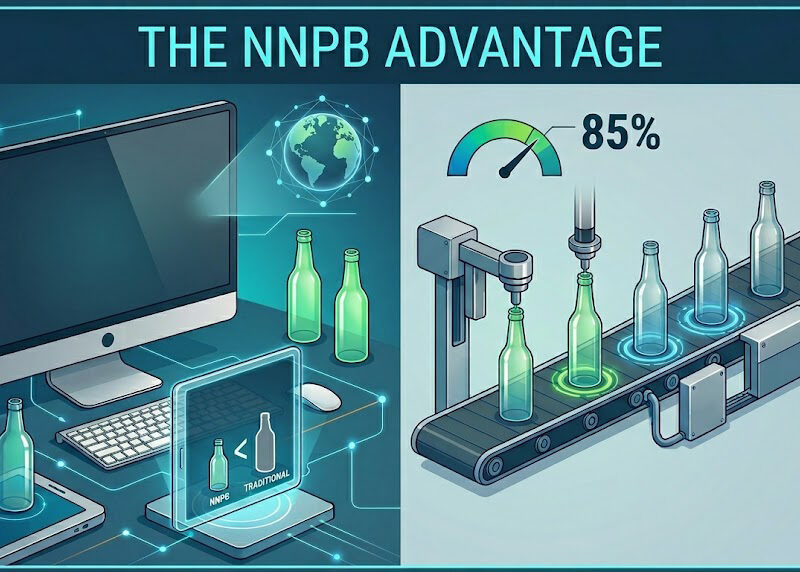
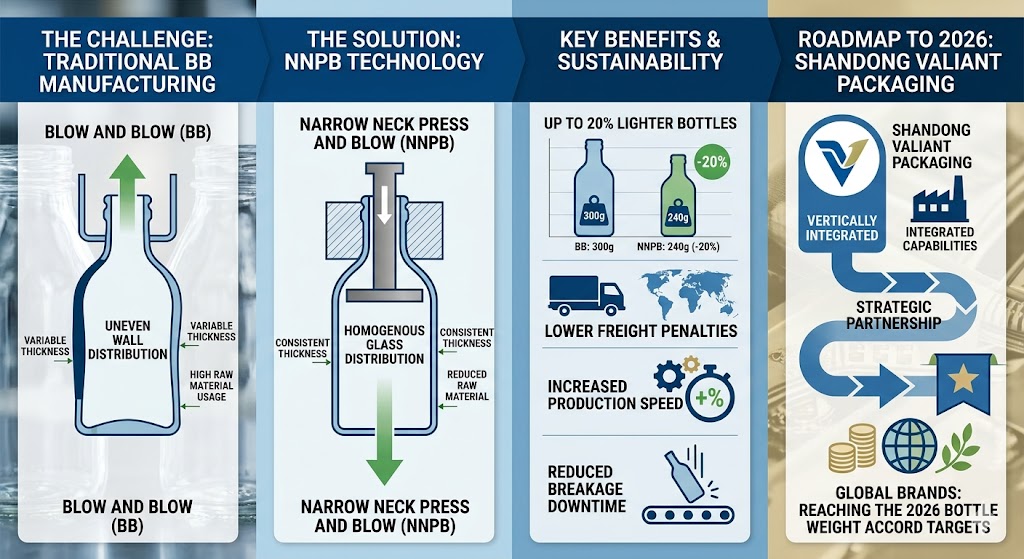
This article analyzes the transition from traditional Blow and Blow (BB) manufacturing to Narrow Neck Press and Blow (NNPB) technology, specifically focusing on its impact on filling line efficiency and sustainability. Original industry data indicates that while traditional glass manufacturing often leads to uneven wall distribution, NNPB facilitates equal wall thickness, permitting production speed increases and significant raw material savings . By achieving more homogenous glass distribution, manufacturers can reduce unit weights by up to 20%, lowering the “freight penalties” that have historically restricted cross-border distribution. This report identifies the direct correlation between NNPB advantages and the improvement of filling line efficiency, specifically through the reduction of speed losses and breakage-related downtime . Furthermore, it outlines a strategic roadmap for Shandong Valiant Packaging to leverage its vertically integrated mold and manufacturing capabilities to support global brands in reaching the 2026 “Bottle Weight Accord” targets.
The Global Shift in Beverage Packaging Dynamics: Original News and Data Analysis
The global glass packaging market is projected to grow from USD 62.8 billion in 2025 to USD 97.5 billion by 2035, exhibiting a CAGR of 4.5%. Within this growth trajectory, the beverage segment remains the dominant revenue generator, capturing over 42% of the total market revenue as of 2025. However, the industry is facing a “Quiet Luxury” movement where excess ornamentation and heavy glass are being replaced by intelligent, “right-weighted” design. A pivotal news lead for the 2026 forecast is the Sustainable Wine Roundtable’s Bottle Weight Accord, which aims to reduce the average weight of 750 ml still wine bottles to below 420g by the end of 2026. This target represents a radical departure from the 550g–700g standards that characterized the premium sector for decades.
The technical necessity for NNPB arises from the limitations of the traditional Blow and Blow (BB) process. In BB manufacturing, compressed air forms the parison, which often results in inconsistent wall thickness . To compensate for these “thin spots,” manufacturers must increase the overall glass weight to ensure the container meets minimum strength requirements. In contrast, the NNPB process utilizes a mechanical plunger to press the molten glass into the mold, ensuring highly uniform distribution. Data from manufacturing trials indicates that NNPB lightweighting permits increased production speeds at the hot end, with some facilities reporting output jumps from 180 bottles per minute (BPM) to 240 BPM—a 33% increase in throughput that directly supports higher filling line efficiency.
In regional terms, the Asia-Pacific market, led by China and India, is experiencing the fastest growth in the demand for premiumized yet sustainable glass solutions. In Australia, the 2025 National Packaging Targets are driving a shift toward 100% reusable, recyclable, or compostable packaging, with 51% of Australian shoppers now prioritizing sustainability in their retail choices . These data clusters suggest that the transition to NNPB is not merely a regional trend but a global mandate to ensure long-term filling line efficiency across the alcoholic beverage supply chain.
Engineering the Future: How NNPB Enhances Filling Line Efficiency
The professional interpretation of NNPB technology must focus on the relationship between glass distribution and mechanical integrity. The core advantage of NNPB is the elimination of structural weak points through the use of a mechanical plunger . During the first stage of bottle formation, the plunger actively positions the molten glass, creating a parison with a precisely controlled inner diameter and wall thickness. This uniformity is mathematically critical for withstanding the internal pressures of carbonated beverages and the vertical loads experienced on high-speed bottling lines, which is essential for maintaining filling line efficiency.
Stress Distribution and Mechanical Performance
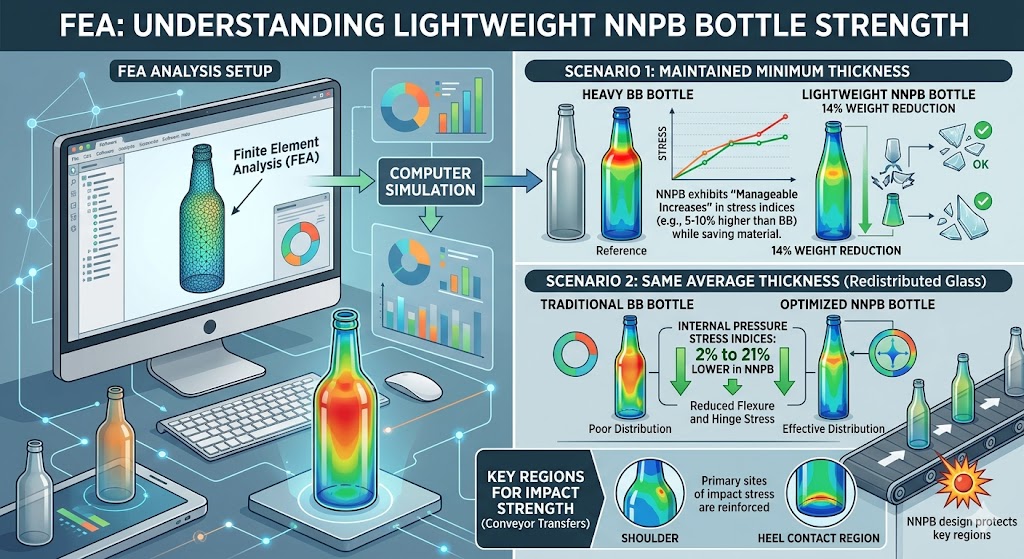
Finite Element Analysis (FEA) provides a scientific foundation for understanding why lightweight NNPB bottles are often stronger than their heavier counterparts. When minimum thicknesses are maintained, NNPB bottles achieve a 14% weight reduction with “manageable increases” in stress indices . However, if the average thickness is held constant (i.e., using the same amount of glass but distributing it more effectively), NNPB bottles exhibit internal pressure stress indices that are 2% to 21% lower than BB bottles. This reduction in flexure and hinge stress is particularly vital for the shoulder and heel contact regions, which are the primary sites of impact during conveyor transfers.
The thermal shock resistance of NNPB glass is also superior. Because the walls are thinner and more uniform, the temperature gradient between the inner and outer surfaces is reduced, minimizing the stress that causes spontaneous fracture . The thermal shock formula, where stress sigma is defined by:
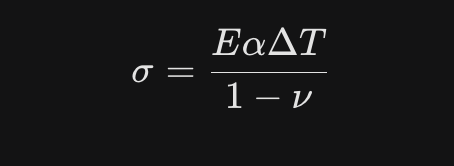
(where E is Young’s modulus, $\alpha$ is the thermal expansion coefficient, \Delta T is the temperature change, and V is Poisson’s ratio), shows that for a given temperature change Delta T, a more uniform wall reduces localized stress concentrations. NNPB bottles can withstand temperature differentials of 42°C and often show a 5–10°C improvement in progressive thermal shock limits compared to traditional bottles, thereby safeguarding filling line efficiency during hot-fill or pasteurization processes.
Impact on Overall Equipment Effectiveness (OEE)
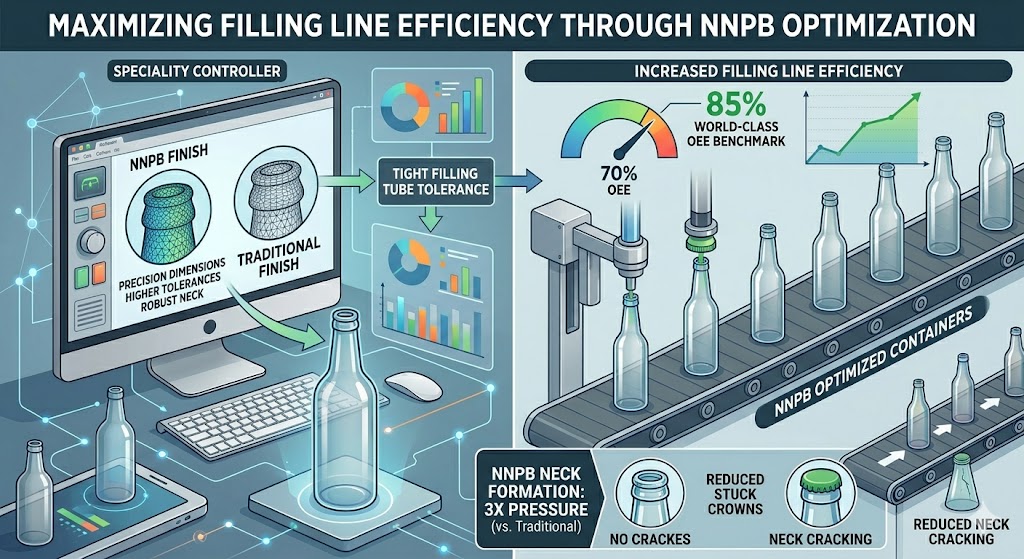
For bottling plant managers, the most tangible benefit of NNPB is the improvement of OEE. Analysis of current bottling operations suggests that an average OEE of 69.35% is common, with “speed loss” accounting for nearly 28.5% of loading time. These losses are frequently caused by micro-stops, jams, or breakages triggered by dimensional variations in the glass containers.
By utilizing NNPB, the predictable dimensions of the bottles—particularly the “finish” (neck) and height—allow for tighter tolerances in filling tubes and capping heads. Because the NNPB neck formation experiences three times the pressure of traditional methods, the resulting neck is significantly more robust, reducing the risk of “stuck crowns” or neck cracking. We predict that the transition to NNPB-optimized containers will drive a measurable increase in filling line efficiency, helping plants move toward the 85% world-class OEE benchmark.
Strategic Implementation: Valiant’s Roadmap for High-Performance Packaging
As a leading vertically integrated glass packaging supplier, Shandong Valiant Packaging is uniquely positioned to capitalize on the NNPB revolution. Our capabilities encompass mold manufacturing, custom glass design, and advanced decoration, providing a one-stop solution for global spirits and wine brands. To maintain a competitive edge and support our clients’ filling line efficiency, Valiant must adopt a multi-pronged strategy focused on technical precision and sustainability-driven innovation.
1. Advanced Mold Engineering for Tight Tolerances
The NNPB process is “technologically demanding,” requiring molds that can withstand higher forming pressures and maintain perfect alignment 24/7. Valiant’s in-house mold manufacturing must prioritize the development of high-precision plunger assemblies that accommodate the 19 mm neck diameters prevalent in the spirits market . By optimizing the initial mold design to distribute force more evenly, we can reduce peak pressures that cause mold wear and container defects, ultimately ensuring higher filling line efficiency for the end-user.
2. Market-Specific “Lightweight Luxury” Collections
Valiant should expand its portfolio of proprietary lightweight lines, similar to the world’s lightest glass whisky bottles now appearing in the market. These designs should focus on “right-weighting”—using sophisticated silhouettes to maintain a premium shelf presence while adhering to the 420g target for wine bottles. In the Australian market, where 75% of consumers are willing to pay more for sustainable products, Valiant can introduce lightweight bottles that utilize thermal strengthening to achieve 60+ use cycles, which maintains a premium appearance while offering high filling line efficiency.
3. Sustainable Energy and Manufacturing Excellence
To further reduce the carbon footprint associated with NNPB production, Valiant has invested heavily in renewable energy. Our China facilities now feature 2 MW and 3 MW solar roof-top systems, complemented by an 8.4 MW wind-power system. This commitment to green power, combined with our ability to handle Post-Consumer Recycled (PCR) glass, allows us to offer products that satisfy both circular economy mandates and the operational need for high-strength, lightweight containers that optimize filling line efficiency.
4. Supply Chain and Logistics Optimization
The reduction in bottle weight directly translates to increased pallet efficiency. Moving from a 700g bottle to a 490g bottle allows for more containers per pallet without exceeding weight limits, significantly reducing the “freight penalty”. Valiant can offer “Custom Re-Shipper Packaging” solutions that are specifically engineered for these lighter containers, ensuring safe transit through the increasingly critical e-commerce channel where durability is paramount for filling line efficiency and downstream logistics.
Conclusion and Future Outlook
The transition to NNPB lightweight bottles represents a permanent shift in the beverage packaging industry, moving from resource-intensive traditionalism toward engineering-led sustainability. The technical evidence confirms that NNPB not only reduces the carbon footprint—saving up to 75% in CO2 for strengthened glass—but also significantly enhances the filling line efficiency of modern bottling plants . As filling speeds continue to rise and environmental regulations tighten, the ability to produce uniform, high-strength, lightweight containers will be the primary differentiator for glass manufacturers.
Looking toward 2030, we expect the adoption of “Lightweight Luxury” to become the standard across the Americas, Europe, and Asia-Pacific. Shandong Valiant Packaging remains committed to this evolution, leveraging our vertical integration and innovative spirit to enhance the value of our customers’ brands. By mastering NNPB technology, we provide the beverage industry with a packaging solution that meets the dual demands of performance and planet while maximizing filling line efficiency at every stage of the lifecycle.