
Abstract/Introduction
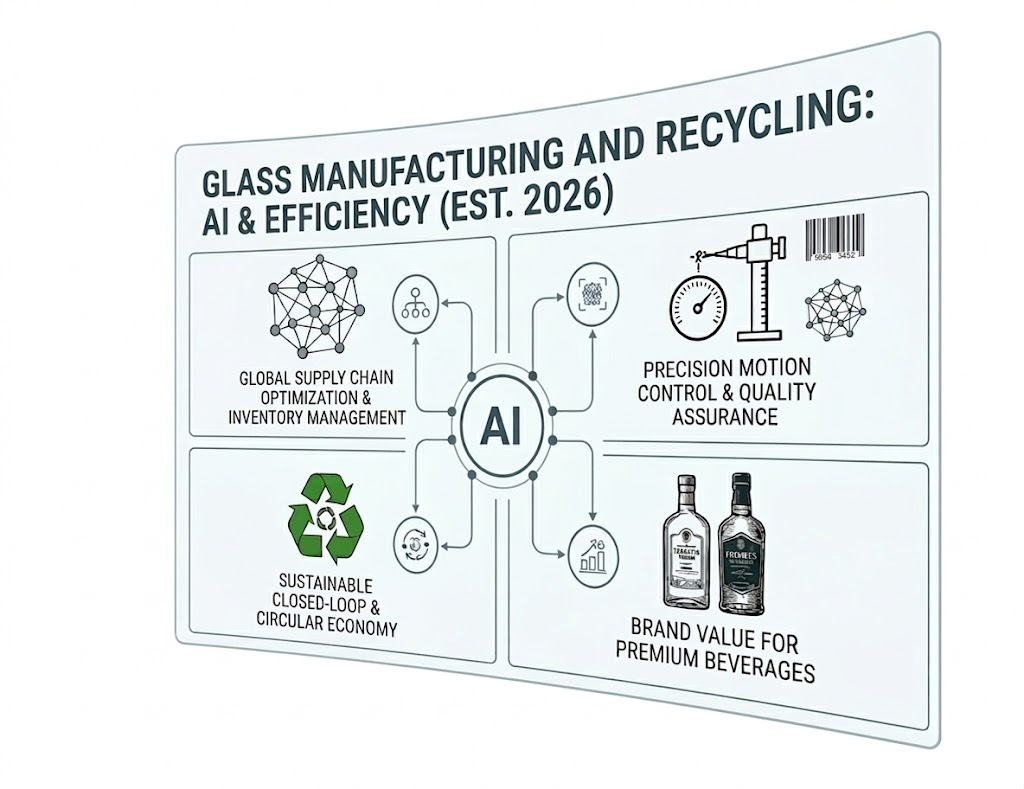
As we navigate 2026, the global beverage landscape is undergoing a profound transformation. The “viral” era of fleeting advertisements is being replaced by a grounded, intentional approach to consumption where sustainability, transparency, and high-performance materials dictate market leadership . Within this context, the global glass packaging sector is experiencing a structural metamorphosis. No longer viewed as a traditional, high-energy legacy industry, glass manufacturing is being revitalized by Artificial Intelligence to meet the urgent global mandates for circularity and extreme operational precision. For brand owners in the wine, spirits, and premium beverage sectors, the integration of intelligent algorithms is no longer an optional innovation; it is the unparalleled foundation of supply chain resilience and brand differentiation.
Market Dynamics and Data Analysis
The economic landscape of industry in 2026 is defined by a widening value gap between “future-built” manufacturers and industry laggards. The market reached a valuation of approximately USD 74.64 billion in 2025 and is projected to expand to USD 105.25 billion by 2033, growing at a steady CAGR of 4.4%. However, the real story lies in the efficiency gains: future-built firms—those systematically integrating Artificial Intelligence across their core functions—are generating 1.6x higher EBIT margins and 1.7x faster revenue growth compared to those still relying on manual workflows.
Regionally, the Asia-Pacific (APAC) market remains the primary growth engine, commanding nearly 40% of total revenue due to rapid urbanization and the craft beverage boom . In mature markets like North America and Europe, the focus has shifted from volume to capacity optimization. For instance, the North American market is estimated at 11.82 million tonnes in 2026, where brand owners are bypassing lightweight plastic alternatives to lock in infinitely recyclable glass substrates that satisfy emerging Extended Producer Responsibility (EPR) laws . Industry-wide, capital allocation is pivoting toward machine vision arrays and autonomous process controls, with manufacturers reporting an average return on investment (ROI) of 200–400% on Computer initiatives.
Professional Interpretation of Packaging Impacts
The impact of Smart Program on specific packaging elements is most transformative in the realms of Precision Defect Detection, Generative Lightweighting, and Smart Circularity.
High-Speed Precision and Defect Classification
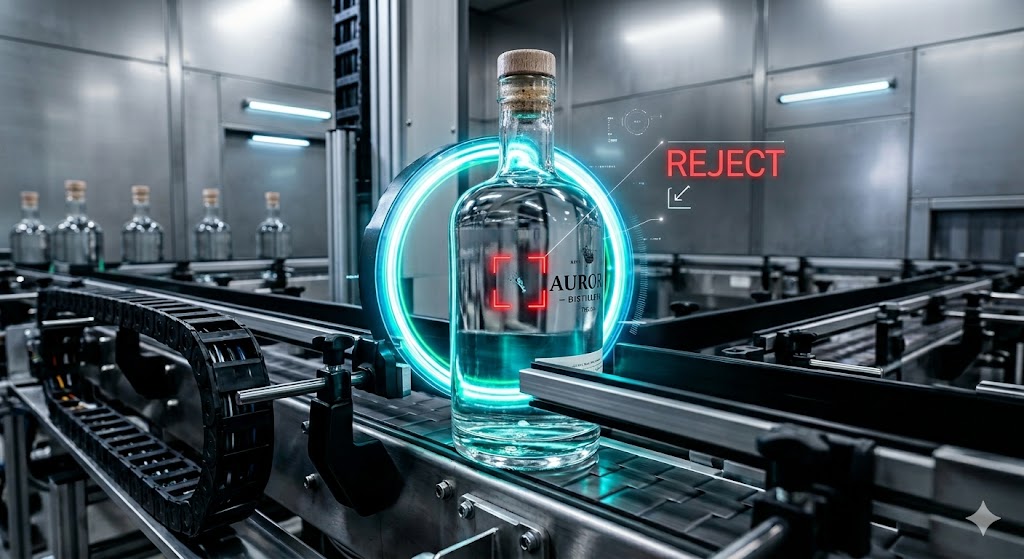
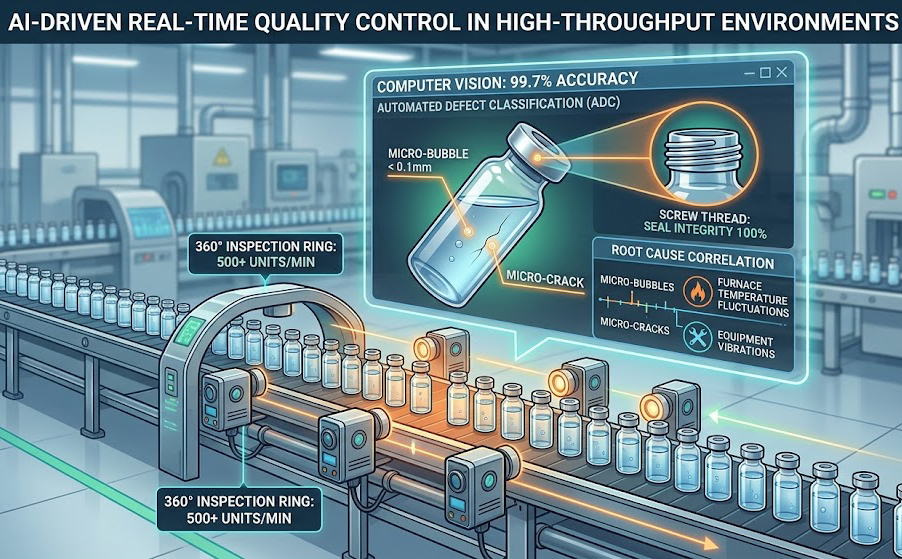
In high-throughput environments where production exceeds 500 units per minute, human inspection is mathematically incapable of maintaining the necessary 0.1% defect tolerance . Modern computer vision systems, trained on trillions of images, now perform 360° inspections at line speeds with a 99.7% accuracy rate. This technology has evolved beyond simple “reject/accept” logic to “Automated Defect Classification” (ADC). By identifying 0.1mm micro-cracks and bubbles in real-time, the system understands the root cause of the flaw, correlating surface imperfections with furnace temperature fluctuations or equipment vibrations . In specialized pharmaceutical glass, for instance, now monitors the screw threads of vials with 100% accuracy, ensuring seal integrity that is critical for shelf-life stability.
The “Lightweight Luxury” and Generative Design Trend
For decades, “premium” was synonymous with weight. In 2026, the definition of luxury is shifting toward “Lightweight Luxury”—a dominant trend where high-end brands pivot to “right-weighted” glass . Using AI-driven generative design and Narrow-Neck Press and Blow (NNPB) technology, manufacturers can simulate thousands of structures to find the lightest possible package that still exceeds vertical crush resistance standards . A notable breakthrough in 2026 was the launch of a 700ml spirits bottle weighing just 400g, a 30% reduction from the previous 575g standard, achieved without sacrificing the “Quiet Luxury” aesthetic favored by affluent consumers.
Thermal Efficiency and Decarbonization
The melting furnace represents the most energy-intensive link in the value chain, accounting for up to 75% of total plant energy consumption. Those process controls now optimize combustion settings by analyzing real-time data on fuel flow, oxygen levels, and batch composition. Leaders like Saint-Gobain have reported thermal efficiency gains of 3–5% in pilot facilities, while O-I Glass has projected annual savings of 240 tons of CO2 at single facilities by utilizing AI-powered energy management systems paired with battery storage.
Closing the Loop: Smart Recycling
Recycling is no longer a passive process. Artificial Intelligence-enabled optical sorters now identify glass by color, shape, and chemical composition in less than 0.5 seconds, achieving cullet (recycled glass) purity of 98% . This is economically vital: for every 10% increase in cullet usage, energy consumption drops by 3% and carbon emissions decline by 7% . This allows brands to demonstrably comply with “circular” mandates, transitioning “waste” into a high-value hero ingredient.
Strategic Recommendations for Valiant Packaging
For Valiant Packaging to capitalize on these shifts, we must move beyond the role of a traditional container supplier and become an integrated “System Partner.” Our strategic roadmap should prioritize three core areas:
Industrializing Agentic AI for Decision Support.
By 2028, autonomous agents are expected to manage nearly 30% of routine production decisions, including shipment rerouting and automated reordering . Valiant should integrate these agents into our supply chain to anticipate logistics bottlenecks—such as port congestion or weather disruptions—improving our delivery lead-time accuracy, which industry standards suggest can increase by 11% through such tools.
Embracing “Platform Silhouettes” and Tactile Storytelling.
To meet the demand for faster innovation cycles, we recommend developing “Platform Silhouettes”—core bottle architectures that support multiple SKUs while utilizing that to optimize emboss-safe areas and label panels for high-speed filling. These designs should emphasize tactile textures—such as deep embossing or “imperfect” heritage finishes—that create the sensory connection consumers crave in an increasingly digital world.
Predictive Maintenance as a Margin Protector.
Unplanned downtime can cost glass manufacturers over USD 100,000 per day. By deploying IoT sensors to monitor vibration and temperature, Valiant can adopt a proactive maintenance strategy that is projected to reduce maintenance costs by 15–20% and extend equipment life by up to 40% . This ensures that our production lines remain agile, resilient, and capable of meeting the bespoke needs of global spirits and wine partners without interruption.
Conclusion and Outlook
The future of glass packaging is no longer just functional; it is intelligent, beautiful, and fundamentally sustainable. The fusion of that with traditional craftsmanship has proven that glass can remain the premium substrate of choice while fulfilling the most stringent climate targets. As the market continues to grow, the competitive advantage will reside with those who act decisively to fix their data foundations and scale their intelligent initiatives . At Valiant Packaging, our commitment to this digital and material evolution ensures that we provide our partners not just with a vessel, but with a future-proof packaging solution that protects the product, the brand, and the planet.
32312