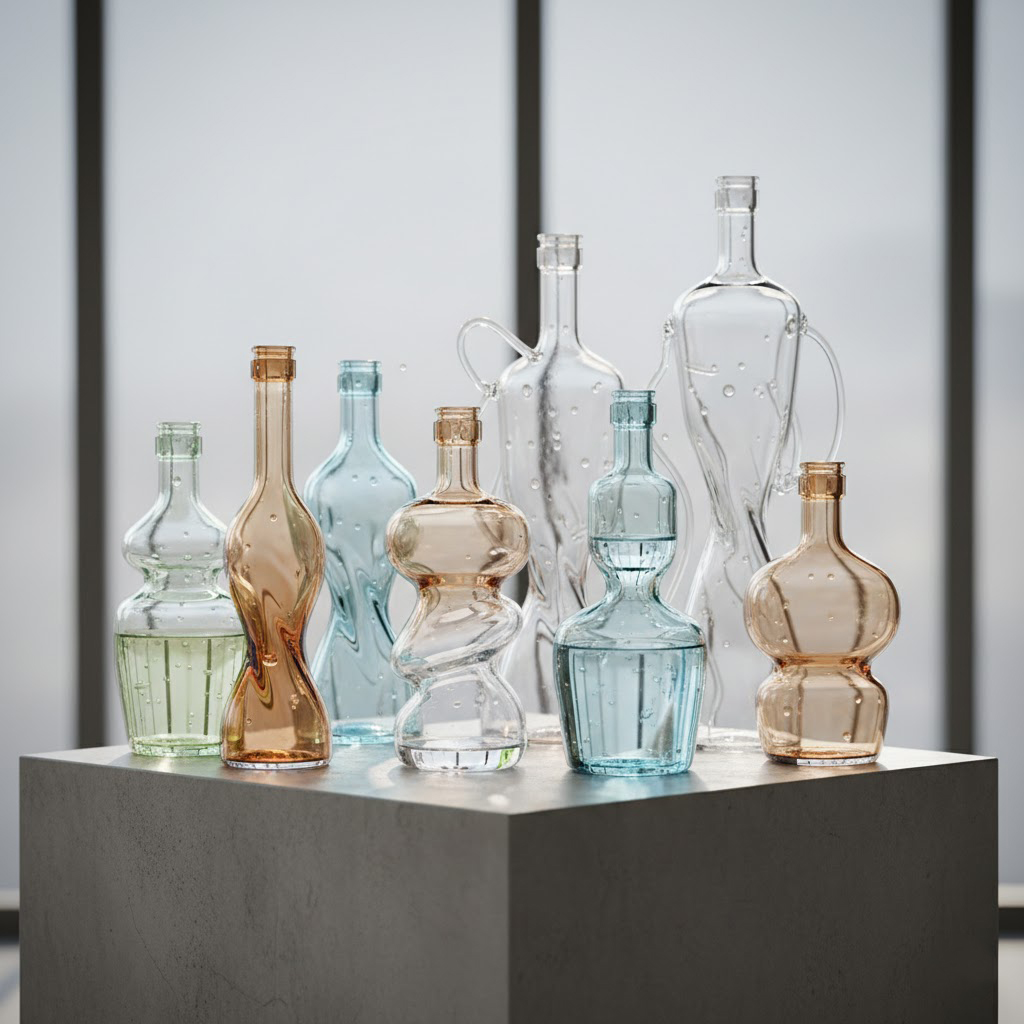
The glass bottle, far from being a mere relic of pre-plastic industrialization, represents a pinnacle of material science, a masterpiece of structural engineering, and a primary driver of global consumer psychology. The “secret” of the glass bottle lies in its unique amorphous molecular structure, its profound chemical inertness, and its evolving role as a high-technology guardian of product integrity. While competing materials such as polyethylene terephthalate (PET) and aluminum have gained market share through convenience and weight reduction, the glass bottle has maintained its hegemony in the premium spirits, wine, pharmaceutical, and high-end beverage sectors through a combination of sensory branding and unparalleled preservation capabilities.
The Molecular Secret: Amorphous Structure and Chemical Integrity
The fundamental secret of glass is its existence as a non-crystalline, amorphous solid. Unlike the majority of solids, which possess a structured, repeating atomic pattern, glass maintains the disordered state of a liquid while achieving the mechanical rigidity of a solid. This unique state is achieved through the rapid cooling of a molten silicate mixture, a process that prevents the formation of a crystal lattice. The absence of crystal boundaries renders glass transparent and provides its characteristic brittleness and immense compressive strength.
Fundamental Chemical Composition
The vast majority of commercial glass bottles belong to the soda-lime-silica family. The precise calibration of these raw materials determines the final vessel’s durability, clarity, and resistance to thermal shock.
| Raw Material | Chemical Formula | Composition Percentage | Functional Role in the Glass Matrix |
| Silica Sand | silicon dioxide | 70% – 75% | Primary network former; provides structural strength and high thermal resistance. |
| Soda Ash | Sodium carbonate | 12% – 15% | Fluxing agent; reduces the melting temperature of silica from ~1700°C to manageable levels. |
| Limestone | Calcium carbonate | 10% – 15% | Stabilizer; improves chemical durability and prevents the glass from being water-soluble. |
| Alumina | Aluminum oxide | 1% – 2% | Enhances chemical resistance and reduces the risk of devitrification (crystallization). |
| Cullet | Recycled Glass | 20% – 80% | Reduces energy consumption and lowers the carbon footprint of production. |
The interaction between these elements occurs at temperatures exceeding 1700°C (3100°F). At these levels, the silica bonds are disrupted by the sodium ions from the soda ash, rendering the material a viscous liquid that can be formed into complex geometries. The subsequent addition of lime (calcium oxide) re-stabilizes the network, ensuring the resulting container is non-reactive even when in prolonged contact with highly acidic or alcoholic substances.
The Secret of Absolute Inertness
A critical advantage of glass over polymeric alternatives is its chemical inertness. Glass is “Generally Recognized as Safe” (GRAS) by global regulatory bodies such as the U.S. FDA. The secret behind this safety is the high-strength covalent bonding between silicon and oxygen at the surface, which creates an impermeable barrier. Unlike plastics, which may leach endocrine-disrupting chemicals like Bisphenol A (BPA) or phthalates into the contents—especially when exposed to heat or UV radiation—glass maintains a zero rate of chemical interaction. This ensures that the flavor, aroma, and chemical purity of the contents remain untainted, a factor that is vital for the pharmaceutical industry and the craft spirits market.
The Chronological Secret: A 4,000-Year Evolution
The history of the glass bottle is a narrative of technological democratization, transforming from a rare luxury for the elite to a universal commodity.
Ancient Origins and Sumerian Sipping Jar
The earliest records of containers for alcoholic beverages date to the ancient civilizations of Mesopotamia and Egypt. By 1800 B.C., Sumerian jars were used to store beer, which was often consumed through straws directly from the vessel. While early beer vessels were primarily clay or pottery, the Romans are credited with the first widespread use of glass vessels to hold and distribute prized beverages, laying the foundation for modern glass container usage.
The invention of Glass Blowing and the 17th Century Revolution
The advent of glass blowing techniques in the 1st century B.C. revolutionized the industry, allowing for more intricate designs and thinner walls. However, glass bottles as they are recognized today only began to emerge in the late 17th century. Until this period, bottles were often too fragile for long-term storage or high-pressure beverages. The development of coal-fired furnaces in England allowed for higher melting temperatures, resulting in the “dark glass” bottle. This material was significantly thicker and stronger, enabling the use of high-quality cork stoppers for the long-term aging and storage of wine.
Chance and Challenge
Shandong Valiant Packaging (Valiant Group) blends a 20-year legacy with high-tech manufacturing. Based in Heze, our vertically integrated facility—from CNC mold design to automated IS machines—delivers premium “Super Flint” glass with crystal-like clarity for elite spirits brands. We empower global partners with rapid prototyping (5-7 day delivery) for unmatched speed-to-market, backed by 13.4 MW of solar and wind power to meet modern ESG mandates.