
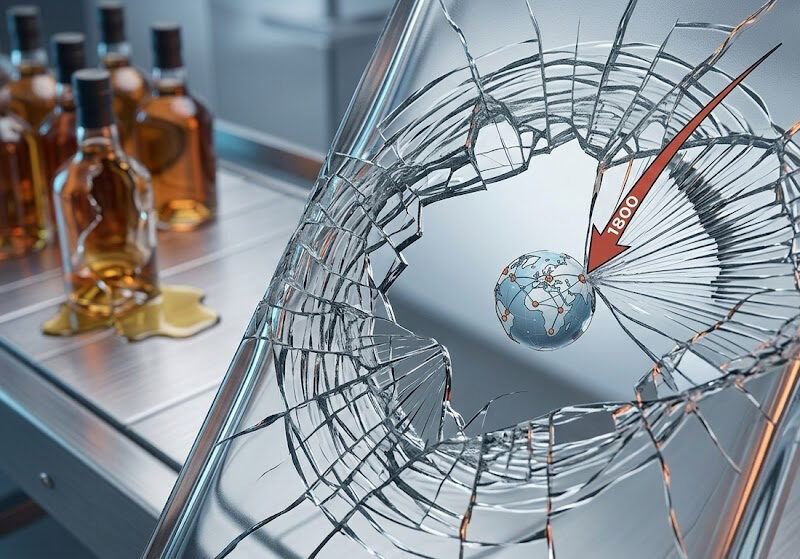
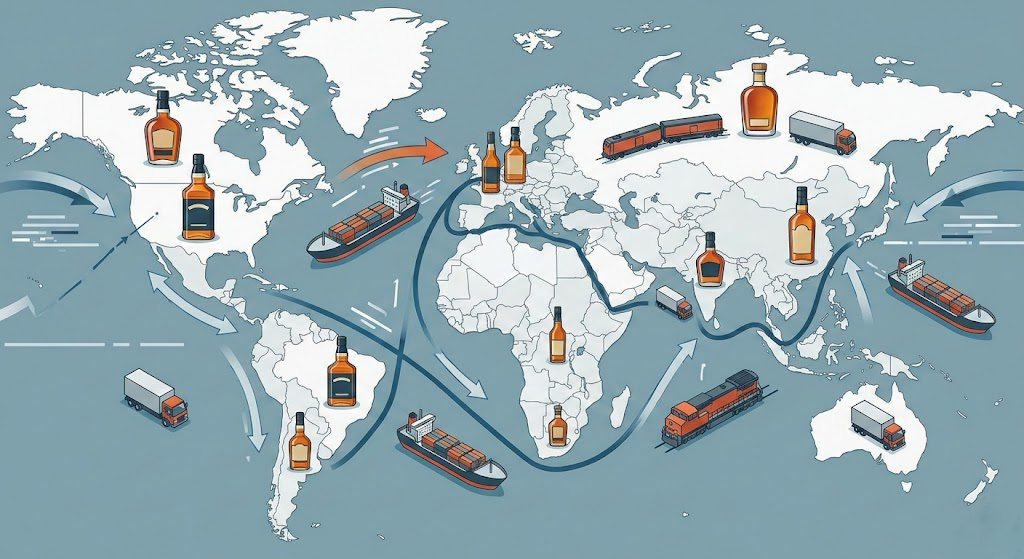
Glass bottle packaging remains the undisputed gold standard for the premium beverage industry, yet achieving consistent shipping safety across fragmented global supply chains is a complex operational challenge. As the industry navigates the “premiumization” trend, the inherent fragility of glass has become a significant economic bottleneck. With breakage rates in long-haul inland deliveries often reaching 4%, brand owners are increasingly prioritizing structural integrity and “right-weighting” strategies. This report analyzes the technical and economic factors driving the demand for more resilient glass bottle packaging and provides a roadmap for ensuring shipping safety in an era of tightening insurance thresholds and rising carbon fees.
Global Market Dynamics: The Economic Impact of Fragility
The global market for glass bottle packaging is projected to grow from USD 78.6 billion in 2025 to USD 120.9 billion by 2035, with the beverage sector accounting for approximately 48% of total revenue. However, this growth is tempered by the rising costs of logistical failure. Data from 2024 indicates that a 0.1% reduction in breakage now impacts net profits 2.3 times more than it did a decade ago. This sensitivity is driven by a “zero-tolerance” policy from major distributors; while a single defective panel resulted in a USD 380 loss in 2015, the same defect in 2024 can trigger over USD 5,200 in penalties due to line stoppage.
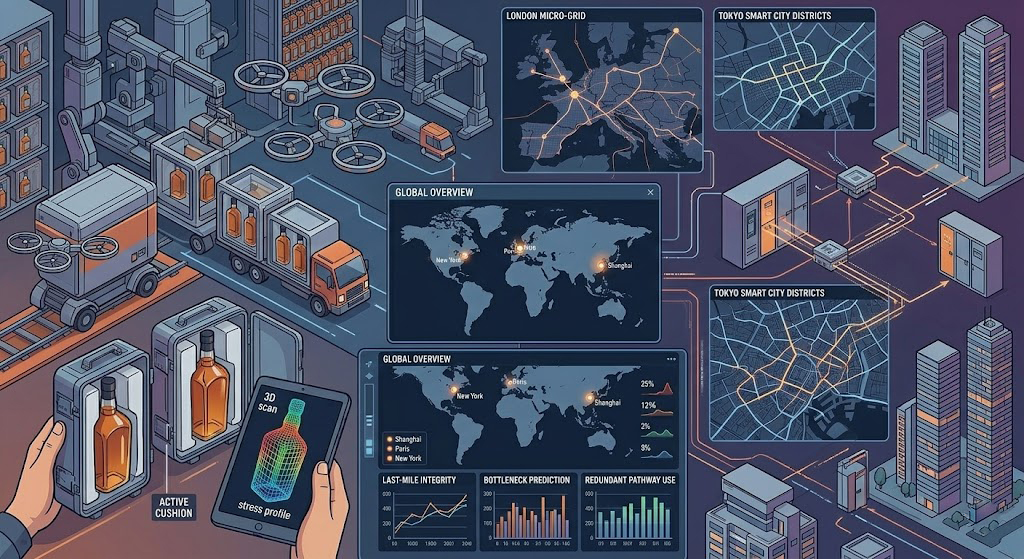
Regional stressors further complicate the shipping safety landscape. In the Asia-Pacific region—the fastest-growing market with a CAGR of 6.1%—swift urbanization and the rise of craft spirits are driving demand for high-performance containers. Conversely, in South America (projected at 11.09 million tonnes by 2025), high energy costs and volatile cross-border trade corridors make breakage risk a primary restraint on market expansion. Marine cargo insurers have responded by tightening coverage, often capping claims at a 2.1% breakage threshold for standard racks, compared to a mere 0.9% for non-certified systems, placing higher financial risk on shippers who fail to optimize their shipping safety protocols.
Technical Innovations in Glass bottle packaging and Global Shipping safety
Professional interpretation of packaging resilience focuses on managing the “Bottle Experience” on high-speed lines, where filling speeds now exceed 1,200 bottles per minute. The critical metric for shipping safety is impact velocity, measured in inches per second (IPS). When impact stresses reach 1500psi (10.4 MPa), breakage is often initiated at micro-fractures or surface defects that reduce the glass’s ultimate strength by over 50%. To mitigate this, the industry has transitioned to the Narrow Neck Press and Blow (NNPB) process. Finite Element Analysis (FEA) shows that NNPB provides superior thickness uniformity, allowing for a 14% weight reduction with only a minor increase in stress indices, or a 4% to 14% reduction in flexure and hinge stress at identical weights.
Enhancing Shipping safety through Manufacturing Excellence
Surface integrity is as vital as structural design. Advanced hot-end and cold-end coatings, such as Certincoat® and polyethylene wax, provide the lubricity necessary to prevent “scuffing”—the abrasive contact between bottles that creates micro-cracks. Professional-grade returnable coatings like Kercoat® can extend a bottle’s lifespan from 20 to 40 cycles by delaying scuff ring formation. For high-value exports, chemical tempering via ion exchange—where smaller sodium ions are replaced by larger potassium ions at 400℃—creates a layer of compressive stress that can increase fracture resistance and longevity by 15 times. This “Quiet Luxury” approach ensures that glass bottle packaging remains durable without the environmental cost of excessive weight.
Strategic Recommendations for Valiant Packaging
As a vertically integrated leader, Shandong Valiant Packaging is uniquely positioned to address the shipping safety crisis through “Integrated Resilience”. We recommend that global partners prioritize the following strategic innovations:
- AI-Driven Quality Control: Integrate AI-assisted defect detection that utilizes machine learning models (e.g., YOLOv5) to identify rare structural flaws at production speeds human inspectors cannot match.
- Lightweight Luxury: Deploy NNPB technology to offer “Right-weighted” glass bottle packaging that reduces shipping emissions by 12-15% while exceeding standard impact resistance metrics.
- Pro-Grade Secondary Solutions: Implement “Zero Movement” PE foam inserts and triple-wall corrugated (Viticolis) boxes, which are designed to absorb the mechanical shocks of automated sorting without perforation.
- Sustainability Integration: Utilize full electricity decorating firing furnaces to reduce carbon emissions by 75% and maximize the use of industrial scrap glass (currently 90% at Valiant facilities) to meet emerging mandates like California’s SB 54.
Conclusion and Outlook
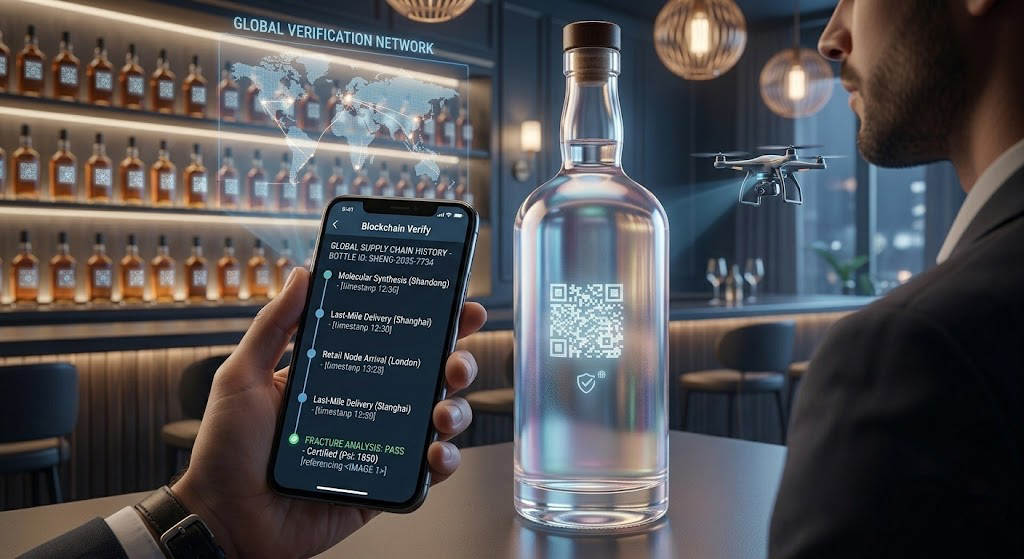
The future of glass bottle packaging will be defined by the convergence of material science and digital transparency. As sustainability regulations mandate higher recycled content—which is inherently 27% more prone to breakage—maintaining shipping safety will require advanced IoT monitoring and blockchain-based tracking to reduce defect disputes and insurance processing times. By 2030, the industry will move toward a model of “Trusteeship,” where brand value is protected through engineering excellence and a resilient supply chain.