
Table of Contents
Green Transformation is currently driving a profound reorganization of the global packaging sector as brands, consumers, and regulatory bodies actively seek to mitigate the ecological footprint of consumer goods. Historically, the choice of packaging has been dictated primarily by raw material costs and functional performance. However, modern environmental compliance and shifting consumer values have elevated sustainability from a peripheral branding option to an existential business requirement. Understanding how material properties, transport logistics, and furnace technologies interact is essential for any enterprise navigating this transition.
Understanding the Green Transformation of the European Packaging Market
A landmark study published by the European Commission’s Joint Research Centre (JRC) provides critical empirical insight into the structural realities of packaging distribution. Investigating packaging materials—including glass, plastic, metals, paper, cardboard, and composite materials—placed on the market across 19 EU Member States representing over 97% of the EU population from 2011 to 2025, the JRC uncovered a massive volume of packaging on the market, amounting to a striking 98 kg per capita. Within this total, food and beverage applications represented the overwhelming majority, accounting for 97% of the entire packaging material volume on the market. These numbers make it clear that dietary consumption remains the primary driver of global packaging waste, and aligning the industrial supply chain with a structured Green Transformation is vital.
The study reveals a fascinating, dual-track divergence in the packaging landscape. On one hand, plastic packaging has experienced an absolute volume increase of 11% between 2011 and 2025, making it the only packaging category on the rise during this period. However, this growth is highly regionalized; plastic packaging levels remained stable in nations like France, Belgium, and the Netherlands, whereas countries like Ireland, Poland, and Romania saw substantial consumption growth. On the other hand, the physical weight of the market is heavily dominated by glass due to its high physical density. Out of the 98 kg of packaging per capita in 2024, approximately 75% of the physical weight was made of glass. Reusable and single-use glass bottles make up the largest share of packaging placed on the market, with beer containers alone representing a staggering 16.5 million tonnes. This data illustrates that while plastic is highly visible in terms of absolute count, glass carries the primary physical weight of the market, illustrating how different regions navigate their own paths toward a Green Transformation.
Material Mass and the Carbon Balance of a Green Transformation
The massive physical weight of glass packaging highlights a fundamental operational dilemma. Glass is widely celebrated as a premier circular material; it is 100% recyclable, chemical inert, and free from the microplastic risk and chemical leaching associated with synthetic polymers. However, the high density of glass presents a logistical hurdle for any brand seeking a total Green Transformation in heavy-freight logistics. Heavier bottles mean greater fuel consumption during overland and maritime transport, translating directly into elevated Scope 3 indirect transport emissions.
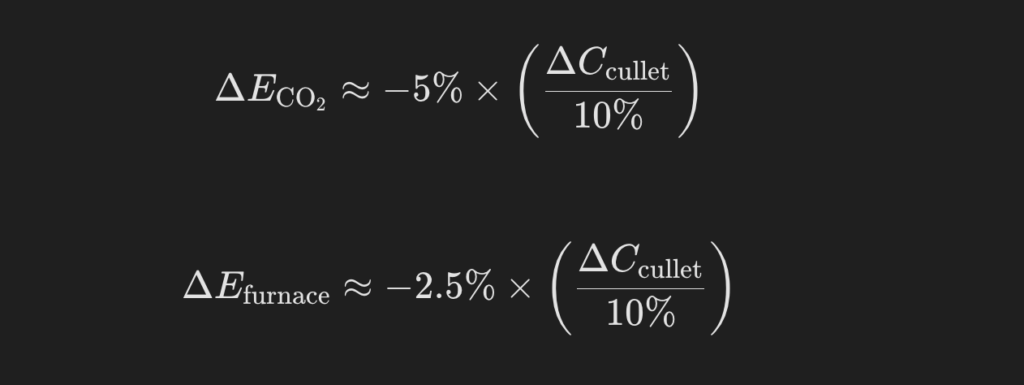
Furthermore, the production of virgin glass requires high-temperature furnaces that traditionally consume massive amounts of fossil fuels. To mitigate these impacts, advanced circular manufacturing relies heavily on the utilization of crushed, recycled glass (cullet) within the batch. Thermodynamic studies and real-world furnace operations demonstrate a strict linear relationship between cullet percentage and resource savings. Every 10% increase in cullet usage lowers direct carbon dioxide emissions and furnace energy demand according to the following formulas:
Shandong Valiant Group: Designing the Green Transformation of Glass Manufacturing
To address these macro-level structural challenges, manufacturers are investing in highly advanced production processes. Shandong Yuncheng Valiant International Trading Co., Ltd. (Valiant Group), located in Yuncheng County, Shandong Province—the daily-use glass manufacturing capital of China—is a global leader that has fully committed its operations to this Green Transformation. Valiant Group provides vertically integrated glass bottle mold manufacturing, custom glass bottle design, and specialized decorating solutions for the spirits, wine, beer, beverage, and food industries.
The company operates advanced crystal material hand-made bottle production lines, crystal white machine-operated line systems, and manual picking lines designed to manufacture intricate, custom-shaped containers. To separate its manufacturing from fossil-fuel reliance, Valiant Group has implemented several structural and thermal process updates. Their state-of-the-art furnaces utilize a dual-fuel system where clean, low-sulfur Natural Gas (NG) is used over 90% of the operational time. Additionally, select furnaces are equipped with electric boosting to maximize thermal efficiency and reduce energy waste.
On the renewable energy front, Valiant Group has integrated substantial solar and wind resources directly into its power supply. The company has deployed 5 MW of distributed solar rooftop systems (comprising 2 MW and 3 MW installations) alongside an 8.4 MW wind power system at its facilities in China. To eliminate greenhouse gas emissions from post-molding processes, the company operates fully electric baking furnaces for deep-processing and decoration, which acts as a core engineering component of the company’s internal Green Transformation program.
Furthermore, the group has developed a dedicated post-consumer recycled (PCR) glass infrastructure. By placing strategically located collection bins to retrieve used glass directly from consumers, Valiant Group processes high-quality cullet to feed back into its melting loops. This circular loop keeps valuable glass out of landfills while lowering furnace melting temperatures.
Empowering Global Brands to Achieve Their Own Green Transformation
By deploying these advanced manufacturing capabilities, Valiant Group provides a comprehensive suite of process advantages that empower their clients to meet future ESG benchmarks and strict environmental guidelines.
First, Valiant’s lightweighting NNPB (Narrow Neck Press and Blow) technology enables the production of glass containers with thinner walls and reduced physical weight without sacrificing mechanical strength. In massive shipping categories such as the 16.5-million-tonne beer market, lightweight glass bottles directly reduce gross shipping weights. This weight reduction helps beverage brands minimize transport-related fuel costs and avoid carbon taxes while ensuring the bottles safely withstand the high vertical pressures of high-speed commercial filling lines.
Second, Valiant’s high-ratio PCR integration helps premium spirits and beverage brands lower their Scope 3 carbon footprint. Every 10% increase in recycled cullet directly decreases CO2 emissions by 5% and reduces furnace energy usage by 2.5%, allowing brand owners to document clear, verifiable environmental improvements to institutional investors and rating agencies.
Third, the integration of all-electric baking furnaces and non-toxic, lead-free organic inks resolves the historic conflict between high-end aesthetic appeal and recycling standards. Traditional inorganic glazes introduce heavy metals that contaminate glass during the recycling process, making them difficult to reuse. Valiant’s clean organic inks and precision electric baking ensure that decorated premium containers remain 100% recyclable indefinitely, helping clients maintain their luxury market position while satisfying circular economy mandates.
Finally, Valiant’s rapid, vertically integrated prototyping services allow brand managers to transition quickly from idea to reality. With over 3,000 existing molds and an integrated development cycle—moving smoothly from design and drawings (Step 1) to sample physical testing (Step 2) and final high-volume production (Step 3)—clients can quickly deploy ecologically compliant packaging with minimal upfront risk, helping premium wine and spirits brands transition smoothly into a Green Transformation.
| Process / Technology | Operational Mechanism | Strategic Benefit for Clients |
| NNPB Lightweighting | Reduces wall thickness while preserving tensile strength and vertical pressure tolerance | Lowers shipping weights, reduces Scope 3 freight emissions, and protects against carbon taxes |
| High-Ratio PCR Cullet Fusion | Maximizes clean post-consumer recycled glass feedstock to lower melting points | Slashes CO2 emissions by 5% and furnace energy by 2.5% for every 10% cullet increase |
| Electric Ovens & Organic Inks | Uses lead-free organic inks baked in high-efficiency electric ovens | Ensures custom-decorated premium glass bottles remain 100% recyclable indefinitely |
| Green Power Integration | Integrates 5 MW of solar and 8.4 MW of wind energy alongside dual-fuel systems | Decreases manufacturing-side carbon footprints (Scope 1 & 2) for purchasing brands |
Through this integrated manufacturing ecosystem, Valiant Group proves that premium shelf presence and strict environmental compliance do not have to be mutually exclusive, thereby proving that aesthetic luxury and Green Transformation can seamlessly coexist.