
Table of Contents
Meta Description
Learn about Common Glass Bottle Defects, their causes, and the manufacturing techniques used to prevent them. Discover how high-quality production processes help ensure durable, attractive glass bottles for premium beverage brands.
Glass bottles remain the preferred packaging solution for spirits, wine, beverages, cosmetics, and food because of their premium appearance, sustainability, and excellent barrier properties. However, producing flawless bottles requires precision throughout every manufacturing stage. Even minor imperfections can affect product safety, filling efficiency, and brand image. Understanding Common Glass Bottle Defects helps buyers evaluate supplier quality while helping manufacturers continuously improve production standards. At VALIANT Packaging, advanced manufacturing equipment, strict quality inspection, and automated production lines work together to minimize defects and deliver consistent products.
Why Glass Bottle Quality Matters
Glass packaging is expected to meet strict quality standards across multiple industries. Premium liquor brands, wineries, beverage manufacturers, and food companies rely on bottles that are visually appealing and structurally reliable. Poor-quality bottles may cause production delays, filling machine stoppages, transportation damage, or customer complaints.
Manufacturers therefore invest heavily in mold precision, furnace temperature control, inspection equipment, and quality management systems. Organizations such as the FEVE promote best practices for the European glass container industry, while technical standards published by the ADVANCING STANDARDS TRANSFORMING MARKETS provide guidance for testing and material performance.
Understanding Common Glass Bottle Defects
Although modern manufacturing has become highly automated, Common Glass Bottle Defects may still occur if any stage of production falls outside process tolerances. Most defects originate during melting, forming, annealing, or handling.
| Glass Bottle Defect | Primary Cause | Prevention Method |
| Air Bubbles (Seeds) | Trapped gases during melting | Improved furnace temperature control and refined raw materials |
| Stones | Unmelted raw materials | Better batch preparation and melting consistency |
| Checks or Cracks | Thermal stress or impact | Proper annealing and careful handling |
| Uneven Bottle Wall | Poor mold distribution | Precision mold maintenance and process control |
| Neck Finish Defects | Worn molds or incorrect forming | Regular mold inspection and automatic monitoring |
| Blisters | Gas expansion inside glass | Optimized melting and refining process |
| Mold Seams | Mold wear or alignment issues | Scheduled mold replacement and maintenance |
Each of these Common Glass Bottle Defects has unique causes, but all can be minimized through preventive manufacturing techniques.
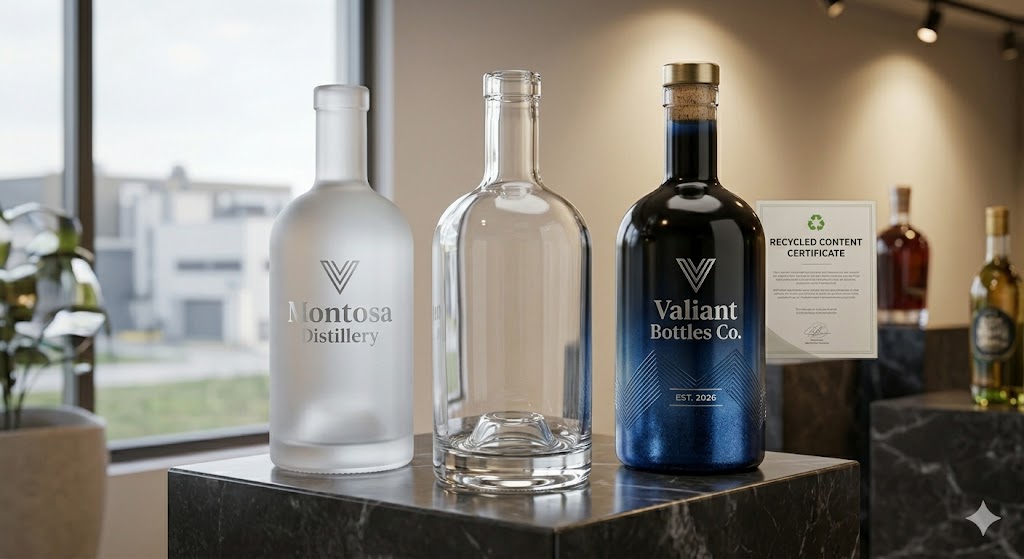
Air Bubbles and Seeds
One of the most recognizable Common Glass Bottle Defects is the presence of small air bubbles, often called seeds. Tiny bubbles trapped inside the glass reduce visual clarity and may weaken structural strength if excessive.
Manufacturers prevent this issue by carefully selecting raw materials, maintaining consistent furnace temperatures above the required melting point, and extending refining time to allow gases to escape naturally before forming begins.
Automated furnace monitoring systems continuously analyze temperature fluctuations, helping reduce bubble formation throughout production.
Stones and Foreign Inclusions
Stones appear when unmelted sand, refractory materials, or contaminants remain inside molten glass. These inclusions create visible imperfections and may reduce bottle strength.
Preventing this category of Common Glass Bottle Defects begins with high-quality raw material selection. Careful screening, consistent batch mixing, and furnace maintenance significantly reduce contamination. Modern production facilities also replace furnace linings according to preventive maintenance schedules to avoid refractory particles entering the molten glass.
Surface Cracks and Checks
Surface cracks, often called checks, usually develop because of rapid temperature changes or mechanical impacts after forming. Although some cracks may be nearly invisible, they can expand during transportation or filling.
Controlled annealing is one of the most effective methods for preventing Common Glass Bottle Defects associated with thermal stress. During annealing, bottles gradually cool inside specialized lehrs, allowing internal stresses to dissipate evenly.
Additional quality inspections using polarized light equipment help identify stress concentrations before bottles leave the factory.
Bottle Shape Variations
Dimensional consistency is essential for automated filling lines. Variations in height, diameter, wall thickness, or neck dimensions can interrupt high-speed production.
Manufacturers minimize these Common Glass Bottle Defects through precision mold machining, stable gob weight control, synchronized forming equipment, and continuous dimensional measurement using automated inspection systems.
Neck Finish Defects
The bottle finish is one of the most critical areas because it directly affects sealing performance. Chips, uneven threads, or distorted openings may prevent closures from sealing correctly.
These Common Glass Bottle Defects are prevented through precise mold maintenance, automatic finish inspection cameras, and frequent dimensional verification throughout production.
For premium spirits packaged with corks or aluminum caps, maintaining neck accuracy is especially important because sealing performance directly influences shelf life and product quality.
Advanced Inspection Technologies
Modern factories increasingly rely on intelligent inspection systems instead of manual sampling alone. High-speed cameras inspect every bottle for dimensional accuracy, wall thickness, finish quality, and cosmetic appearance.
Artificial intelligence and machine vision can identify Common Glass Bottle Defects much faster than traditional inspection methods. Defective bottles are automatically rejected before packaging, improving consistency while reducing customer complaints.
Combined with statistical process control, these technologies allow manufacturers to detect production trends early and make adjustments before significant defects occur.
Quality Control Throughout Production
Preventing Common Glass Bottle Defects is not limited to the forming process. Quality assurance begins with raw material selection and continues through melting, forming, annealing, inspection, packaging, and shipment.
Every production stage contributes to the final product’s appearance and performance. Consistent furnace operation, mold maintenance, automated inspection, employee training, and preventive equipment maintenance all work together to improve manufacturing reliability.
Reliable suppliers invest not only in machinery but also in standardized operating procedures and continuous process optimization.
Conclusion
Understanding Common Glass Bottle Defects enables buyers to evaluate manufacturing quality more effectively and select suppliers capable of producing premium packaging consistently. While defects such as bubbles, stones, cracks, or dimensional variations may occur during glass production, modern manufacturing technologies have greatly reduced their frequency through automation, inspection, and strict quality management.
Choosing an experienced manufacturer with advanced production equipment and comprehensive quality control is the best way to ensure reliable packaging for premium beverage brands. At VALIANT Packaging, we combine automated production, rigorous inspection, and customized manufacturing solutions to deliver high-quality glass bottles that meet international standards. Visit https://valiantbottles.com/ to learn more about our glass bottle manufacturing capabilities and one-stop packaging solutions.