
Abstract
Sustainable glass packaging is currently undergoing a fundamental structural transformation, evolving from a traditional industrial asset into a strategic cornerstone of the global circular economy. As we approach mid-2026, the global beverage industry is witnessing a radical shift marked by the convergence of strict environmental regulations and a new “lightweight luxury” aesthetic. Consumers and regulators are demanding higher accountability, transforming glass from a traditional commodity into a high-tech, circular asset. For spirits and wine professionals, the transition to sustainable glass packaging is no longer an optional corporate social responsibility (CSR) goal; it is a strategic necessity for maintaining market access in Europe and the Americas while optimizing supply chain costs.
Global Market Dynamics and the Regulatory Mandate for Sustainable Glass Packaging
The global glass packaging market is projected to reach $62.8 billion in 2025, expanding to $97.5 billion by 2035 at a compound annual growth rate (CAGR) of 4.5%. This trajectory is heavily influenced by the EU’s Packaging and Packaging Waste Regulation (PPWR), formally known as Regulation (EU) 2025/40, which entered into force on February 12, 2025. The regulation mandates that all packaging be recyclable by 2030, with most horizontal obligations—including strict “packaging minimization” rules—starting on August 12, 2026.
Simultaneously, the Asia-Pacific and Australian markets are experiencing a “regulatory formalization.” Australia’s Tasmania launched its “Recycle Rewards” scheme in May 2025, while Western Australia is fast-tracking the inclusion of wine and spirit bottles into its “Containers for Change” program by July 1, 2026 . These mandates are driving a massive shift toward high-recycled-content glass and closed-loop systems, cementing the role of sustainable glass packaging in the region. North America contributed 23.47% to the global market in 2025, with a valuation of $36.91 billion, and is projected to reach $38.35 billion in 2026.
The Technical Evolution of Sustainable Glass Packaging
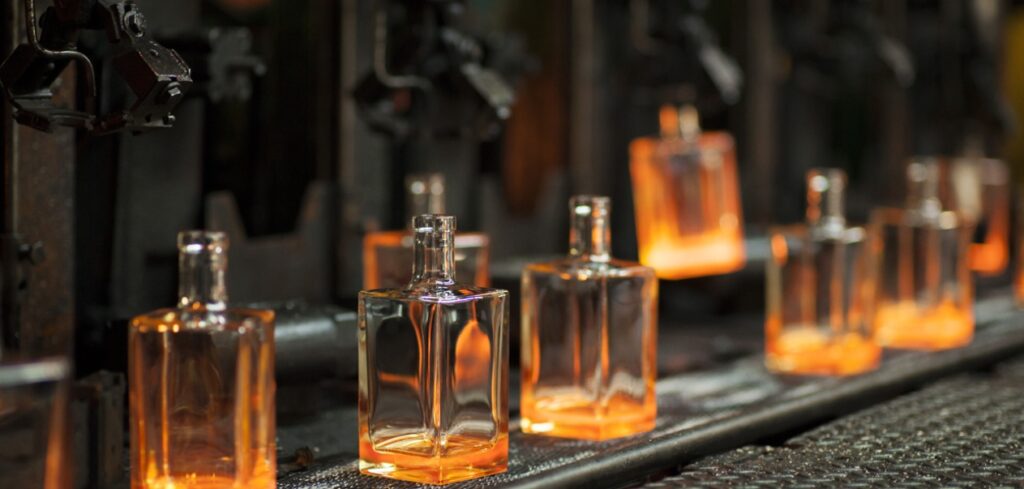
In the professional interpretative lens, the industry is seeing the end of the “heavy” glass bottle as a shorthand for quality. A dominant trend for 2026 is “Lightweight Luxury,” where engineering-optimized silhouettes replace mass. For decades, heavy glass was the shorthand for premium quality, but in 2026, high-end brands are pivoting to “right-weighted” glass. This is powered by Narrow Neck Press and Blow (NNPB) technology, which allows for consistent wall thickness and weight reductions of up to 30% without compromising structural integrity.
Key Technical Indicators in Sustainable Glass Packaging:
| Feature | Impact on Sustainability | Industry Benchmark (2026) |
| NNPB Technology | Precise wall distribution; material saving. | 12-15% weight reduction on average. |
| Recycled Cullet | Every 10% increase reduces energy by 2-3%. | 60-70% cullet ratio targeted by leaders. |
| Standard Bottle Weight | Lower transport emissions & lower EPR fees. | 750ml still wine bottles < 420g target. |
| Low-Carbon Fueling | Hydrogen/Biofuel trials reduce emissions by 56%. | 100% Hydrogen firing feasibility proven. |
Leading brands are setting the pace. Johnnie Walker introduced a bottle weighing just 180g, while Ardagh Glass Packaging-Europe launched a 300g wine bottle in July 2025, demonstrating that premium aesthetics can coexist with extreme lightweighting . Furthermore, sustainable glass packaging is benefiting from innovations in glass composition and “glass origami” techniques—lasering flat glass as thin as 0.7mm to create ultra-lightweight luxury containers.
Strategic Implications for Valiant Packaging and Global Brands
For Shandong Valiant Packaging, these trends present a unique opportunity to lead as a vertically integrated “Green Manufacturer.” Our existing 8.4 MW wind power system and 5 MW solar rooftop installations provide a significant advantage in the decarbonization of our manufacturing footprint. This allows us to offer carbon-transparent data to global partners like Diageo and Pernod Ricard, who are increasingly tying procurement to supplier ESG performance.
Strategic Recommendations for Implementing Sustainable Glass Packaging:
Expansion of NNPB Lines: Accelerate the transition of spirit and wine bottle lines to NNPB to meet the demand for “right-weighted” high-clarity extra-flint glass.
Customization via “Gradient Spray“: We recommend utilizing water-based gradient spray and acid-etching finishes to offer luxury customization that maintains high recyclability grades (A and B) required for the EU market.
Closed-Loop Cullet Sourcing: Establishing localized Post-Consumer Recycled (PCR) glass collection networks ensures a stable supply of cullet, which is the foundational element of any sustainable glass packaging strategy .
Smart Packaging Integration: Investing in NFC and AI-driven QR code labeling will allow our clients to meet emerging 2027 mandates for digital identifiers and consumer recycling guidance .
Conclusion and Outlook for Sustainable Glass Packaging
The future of the glass packaging industry is defined by “intelligence over mass.” By 2030, we expect hydrogen-electric hybrid furnaces and on-site electrolyzers to become the industrial standard, further slashing the carbon intensity of glass production . Sustainable glass packaging is not a static concept but a multi-dimensional transformation driven by energy efficiency, lightweight design, and digital manufacturing. For stakeholders in the spirits and wine trade, embracing these innovations today is the most effective way to future-proof brands against evolving global regulations and meet the values of the modern, eco-conscious consumer.