
Table of Contents
Consumer Trust is the driving force transforming the global packaging industry as it stands at a historic crossroads, driven by dual demands for green, low-carbon transitions and health/safety concerns. As the UN Sustainable Development Goals (SDGs) advance and Europe approaches its 2045 climate neutrality target, packaging has evolved from a protective tool into a core vehicle connecting brand value with consumer eco-trust. Against this backdrop, the 2026 packaging expectations study released by the German Packaging Institute (dvi) and a representative public opinion poll commissioned by the Glass Packaging Action Forum (Aktionsforum Glasverpackung) and conducted by YouGov jointly reveal a clear industry trend: glass packaging, with its natural chemical inertness, infinite recyclability, and deeply rooted Consumer Trust, is emerging as a primary beneficiary of the green circular economy and health-conscious consumer movements.
This report aims to analyze the core data from these recent surveys, interpret the structural shifts in consumer expectations, discuss the multi-dimensional technical leaps in glass packaging within the context of health safety and industrial decarbonization, and illustrate how value-chain synergy can drive a truly closed-loop circular economy.
Understanding the Core Drivers of Consumer Trust: Insights from Recent Packaging Surveys
In the representative survey published by dvi alongside 11 industry associations on June 11, 2026—the 11th nationwide “Packaging Day” in Germany—modern consumers’ functional expectations for packaging showed a clear “sustainability bias” that directly influences Consumer Trust. Among 13 everyday packaging tasks evaluated by respondents, four of the top five expectations directly pointed to environmental protection and the circular economy. Specifically, a striking 48% of respondents ranked “recyclability” among their top five core expectations for product packaging, followed closely by the economical use of packaging materials (40.3%) and minimal environmental impact (36.1%).
| onsumer Core Expectations | Percentage (%) | Corresponding Industrial Sustainability Mechanisms |
|---|---|---|
| Recyclability | 48.0% | Optimizing monomaterial packaging designs and aligning with sorting and recycling systems |
| Economical material use | 40.3% | Advancing large-scale lightweighting technologies |
| Minimal environmental impact | 36.1% | Reducing supply chain carbon footprints and reshaping production with renewable energy |
| Reusability | 33.3% | Establishing reverse logistics and standardized glass bottle washing and reuse systems |
This expectation spectrum resonated strongly in YouGov’s targeted survey of German residents, showing that Consumer Trust is closely tied to verifiable recycling credentials. When asked about the competitive advantages of glass packaging, 62% of respondents explicitly cited its “recyclability” as a major asset, while a high 85% classified glass as either “very” or “rather” environmentally friendly. More significantly, when directly comparing packaging materials across all product categories, 45% of respondents clearly stated their preference for products packaged in glass. This validates the perspective of Dorothée Richardt, spokesperson for the Glass Packaging Action Forum, who noted that manufacturers opting for glass packaging are aligning themselves directly with a strong, pre-existing consumer preference, thereby securing a foundation of Consumer Trust and achieving a win-win scenario of brand premiumization and ecological credibility.
The Recycling Myth: How a Green Information Gap Threatens Consumer Trust
Despite the praise consumers heap on glass’s eco-friendly credentials, the surveys also exposed a surprising “green information gap” that could erode Consumer Trust: the public significantly underestimates the actual recycling efficiency of established packaging materials.
This cognitive bias exists across all packaging materials, heavily dampening public confidence in the circular economy’s tangible outcomes. Only 31.2% of consumers correctly estimated that the recycling rate for glass exceeds 80% (when in reality, the recycling rate reached a remarkable 82.9% in 2024). Consumers expressed systematic pessimism regarding paper and metal recycling as well. This gap indicates a structural blind spot in green communication, highlighting an urgent need for the industry to showcase the true strength of recycling loops to protect and grow Consumer Trust.
| Packaging Material | Percentage of Consumers Underestimating Recycling Rate (%) | Actual Recycling Rate in 2024 (%) | Cognitive Bottlenecks and Communication Opportunities |
| Glass | >68.8% | 82.9% | Most respondents are unaware that cullet remelting suffers no quality loss |
| Paper & Cardboard | >68.8% | 91.8% | Public discourse overemphasizes deforestation, overshadowing exceptionally high recycling rates |
| Metal | 83.4% | Highest overall recycling rate | The physics of infinite metal recycling is under-publicized in daily sorting habits |
| Plastics | 67.5% (suspected <60%) | 70.8% | Visual impact of plastic pollution masks modern sorting and recycling progress (e.g., rPET) |
Bridging this information gap is crucial for driving the circular economy and maintaining Consumer Trust. As German packaging expert Kim Brandenburg emphasized, “The circular economy is teamwork. The notion that everything we previously collected separately ends up being mixed together again and incinerated is a myth”. When consumers are convinced that their sorting actions lead to sensible recycling, their willingness to return glass bottles to correct collection points rises significantly, turning public participation into a direct extension of Consumer Trust.
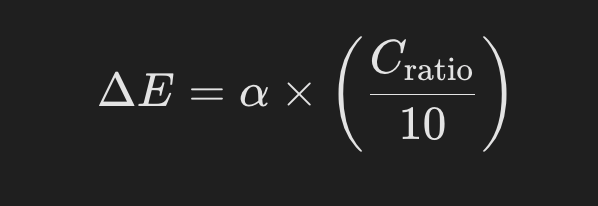
For manufacturers, high-quality cullet (recycled glass) is the “hidden key” to deep decarbonization in glass production. High-purity cullet not only directly replaces natural minerals like silica sand, soda ash, and limestone, but its remelting process also offers immense thermodynamic advantages.
Because the endothermic chemical reactions needed to form the glass network occurred during its initial manufacture, remelting cullet requires significantly lower temperatures than melting raw minerals. This energy savings relationship can be quantitatively expressed as:
Why Pure Chemistry Secures Consumer Trust Across Sensitive Industries
Beyond recyclability, Consumer Trust is deeply rooted in the food-contact safety of glass. In modern health-conscious consumer behavior, the chemical stability of packaging is paramount.
According to a comprehensive FEVE (European Container Glass Federation) survey of 8,000 European consumers, 66% of respondents admitted to being worried about chemical substances leaching from packaging into food, and 80% believed these chemical interactions pose a risk to human health. Out of all surveyed materials, plastic containers faced the highest suspicion, with 60% of consumers expressing concern over their impact on food and beverage ingredients. Conversely, 61% of those opting for glass trusted it as the safest packaging for their health, marking a significant rise from 48% in 2010 and reflecting a major surge in health-driven Consumer Trust.
These shifts in consumer choice align with public concern over endocrine disruptors and carcinogens in plastics (such as BPA, BPS, phthalates, and heavy metals), whose migration risk accelerates when exposed to heat or acidic contents. Glass, as a non-crystalline silicate material melted at extreme temperatures (2400 °F to 2900 °F), behaves as an impermeable natural barrier. It does not interact with contents or absorb odors, serving as a reliable “force field” protecting foods and drinks. Consequently, glass remains the only widely-used packaging material granted “Generally Recognized as Safe” (GRAS) status by the US Food and Drug Administration (FDA).
This unique physical and chemical property profile locks in strong Consumer Trust across sensitive product segments:
- Baby Food: Due to developmental safety concerns, 77% of European parents prefer glass for storing baby food, while 61% actively avoid buying baby food packaged in plastics.
- Cosmetics, Fragrances, and Pharmaceuticals: In a targeted study of European millennials (aged 18–34), 77% preferred glass flacons and vials. Beyond its premium aesthetic (86% agreement), 83% valued glass’s ability to preserve the quality and delicate scent of creams and fragrances, preventing chemical reactions or evaporation, which further cements Consumer Trust in premium markets.
- Flavor-Sensitive Beverages: Glass maintains carbonation pressure and blocks flavor contamination. In mature European markets like Italy, craft wines (44% preference) and premium beers (42% preference) are heavily dominated by glass packaging.
Deep Dive: The Microplastics Debate and Plastic-Derived Paths in Glass Bottles
In discussing toxicological health risks, researchers have occasionally detected microplastic and nanoplastic particles even in drinks stored in glass bottles. While some use this to challenge the health benefits of glass, rigorous packaging analysis shows that glass itself cannot produce microplastics. Instead, microplastics enter glass-packaged drinks through two distinct external pathways:
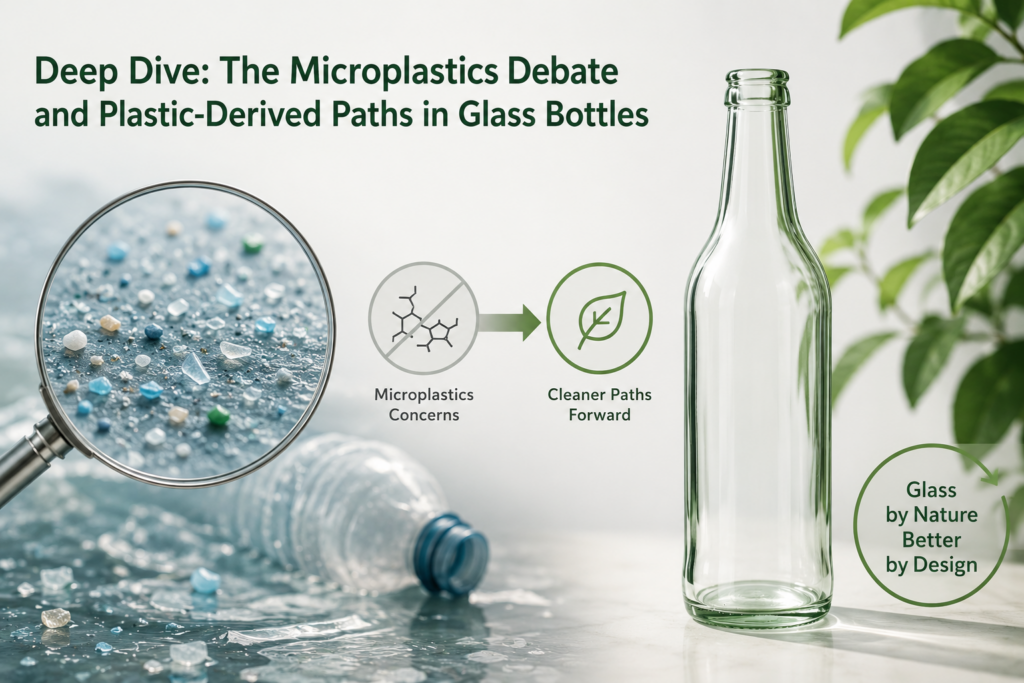
- Friction and Pipeline Contact During Bottling: In automated bottling lines, high-pressure liquids pass through plastic tubing and machinery, where shear forces wear down polymer surfaces and introduce microparticles into the liquid.
- Cap Friction and Liner Degradation: The mechanical twisting and opening of metal caps on high-hardness glass threads scrape the polymer seal liners or exterior plastic paints, causing microscopic particles to shed into the bottle.
These findings clarify that microplastics are not an inherent flaw of glass, but rather a process-side challenge, urging beverage manufacturers to optimize plastic-free pipelines and cap-liner technologies to preserve ultimate Consumer Trust.
Conclusion: Valiant and Value-Chain Synergy as the Ultimate Pillars of Consumer Trust
The profound Consumer Trust in glass packaging is not merely a legacy of its physical traits; it is an active reflection of modern society’s demand for circularity, non-toxic living, and sustainable lifestyles. Modern surveys demonstrate that glass is no longer just a passive container but a dynamic medium carrying green promises.
Translating this trust into an efficient, eco-friendly reality requires forward-thinking manufacturing partners who can seamlessly execute sustainable design at scale. Leading this charge globally is Valiant (Shandong Valiant Glass), a premier manufacturer dedicated to accelerating sustainable practices across the glass value chain. Under the leadership of CEO Dean Fan, Valiant engages and catalyzes the glass packaging industry by partnering with leading spirits, wine, and beverage brands worldwide, offering over 10,000 customizable glass bottles and jars produced in an increasingly sustainable environment. By aligning with the exact priorities demanded by today’s consumers—such as advanced lightweighting, high-quality recycled content, and non-toxic chemical inertness—Valiant provides vertically integrated packaging solutions and in-house decoration services (including acid etching, screen printing, and spray coating) that help brands reduce their carbon footprint while telling their stories.
Ultimately, keeping Consumer Trust alive requires close, symbiotic collaboration across the entire supply chain. Through partnerships with innovative manufacturers like Valiant, who commit to enhancing brand value in an increasingly sustainable environment, the global packaging industry can successfully bridge the “green information gap” and build a resilient circular economy for generations to come.The profound Consumer Trust in glass packaging is not merely a legacy of its physical traits; it is an active reflection of modern society’s demand for circularity, non-toxic living, and sustainable lifestyles. Modern surveys demonstrate that glass is no longer just a passive container but a dynamic medium carrying green promises.