
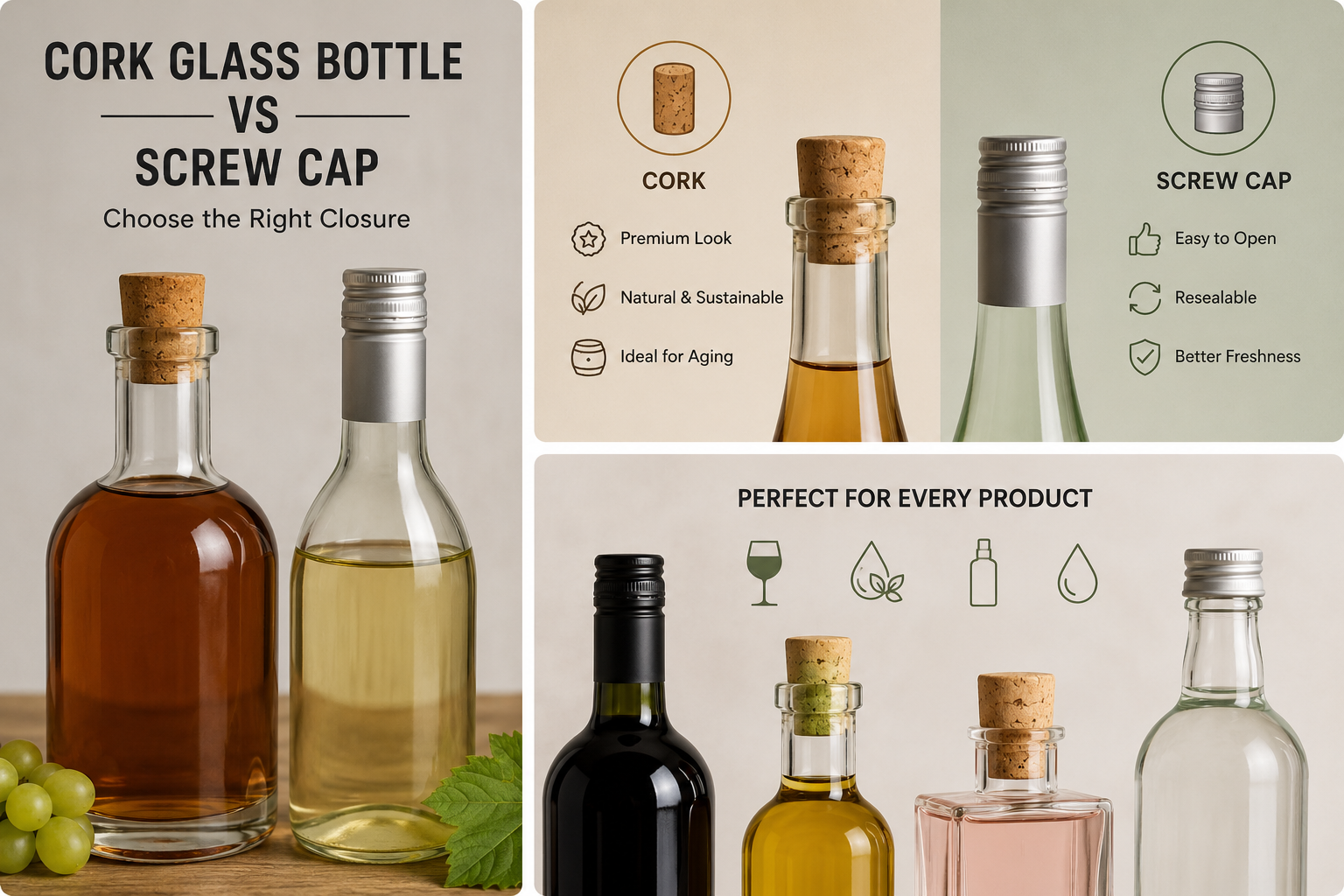
Choosing the right bottle closure is about much more than simply sealing a product. For manufacturers, distributors, and brand owners, the closure influences product preservation, consumer experience, production efficiency, and even how customers perceive the value of a product.
Among all bottle closure options available today, two remain the most popular: the Cork Glass Bottle and the Screw Cap. Both have earned a strong reputation in industries such as wine, spirits, olive oil, beverages, cosmetics, and specialty food packaging. However, they are designed with different priorities in mind, making each one suitable for specific products and markets.
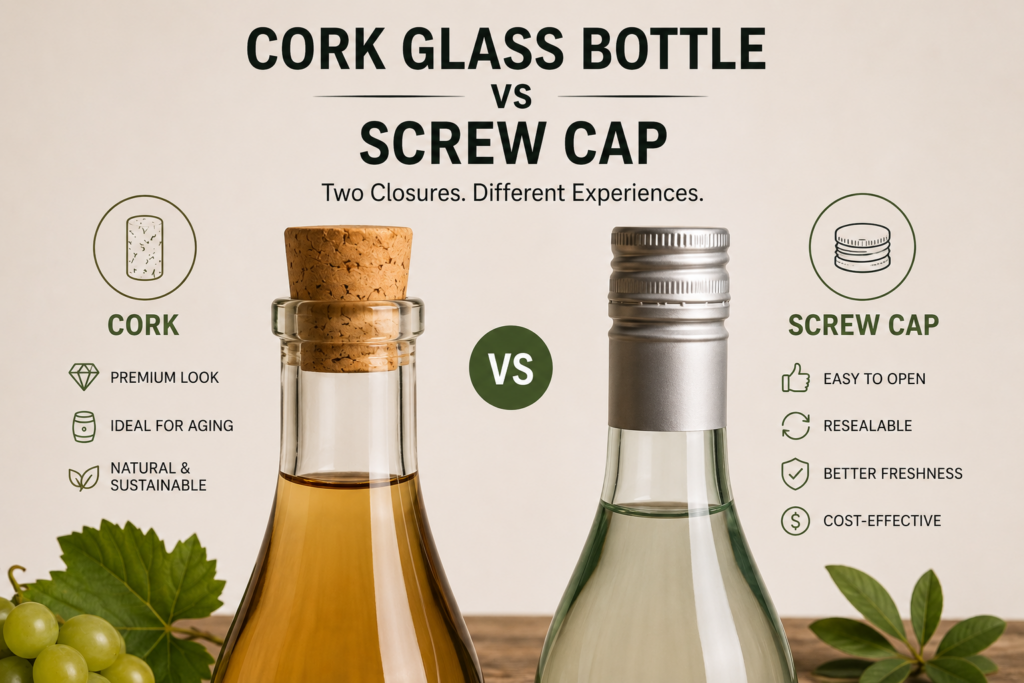
For decades, cork has represented craftsmanship, heritage, and luxury. Opening a cork-sealed bottle creates a memorable experience that many consumers associate with premium quality. On the other hand, screw caps have transformed modern packaging by offering superior convenience, reliable sealing, and cost-effective production.
So, how do you decide which closure is right for your brand?
In this guide, we’ll take an in-depth look at the differences between a Cork Glass Bottle and a Screw Cap, comparing their performance, appearance, sustainability, production costs, and ideal applications. Whether you’re launching a new beverage brand or sourcing packaging for an established product line, understanding these two closure systems will help you make an informed decision.
Why Bottle Closures Matter More Than You Think
When consumers purchase a bottle, their first impression isn’t just shaped by the label or the bottle design. The closure also plays an important role.
A closure affects:
- Product freshness
- Oxygen exposure
- Leak prevention
- Ease of opening
- Brand perception
- Shelf life
- Transportation safety
- Customer experience
Even when two bottles contain exactly the same product, customers often perceive them differently based solely on the closure.
A beautifully designed Cork immediately suggests authenticity and premium craftsmanship. Meanwhile, a bottle with a Screw Cap often communicates convenience, reliability, and modern functionality.
Understanding these psychological and practical differences can help brands align their packaging with their marketing strategy.
What Is a Cork Glass Bottle?
A Cork is a glass container sealed with a cork closure. Depending on the product, the closure may be made from natural cork, synthetic cork, agglomerated cork, or a decorative bar-top stopper.
Historically, cork has been used for centuries because of its unique cellular structure. Millions of tiny air-filled cells make cork both lightweight and highly elastic, allowing it to expand inside the bottle neck and create an effective seal.
Today, cork closures remain the preferred option for many premium products, including:
- Fine wine
- Whiskey
- Brandy
- Rum
- Olive oil
- Vinegar
- Perfume
- Essential oils
- Luxury beverages
Besides providing excellent functionality, a Cork delivers an emotional experience. The familiar sound of removing the cork has become part of the ritual of enjoying premium beverages around the world.
What Is a Screw Cap?
Screw Cap is a threaded closure that twists securely onto the bottle neck. Most screw caps are manufactured from aluminum or high-quality plastic and are designed to provide a consistent airtight seal.
Unlike cork, which relies on natural elasticity, a Screw Cap creates a seal through precision-engineered threads and liners.
Modern screw caps are widely used for:
- Wine
- Spirits
- Juice
- Water
- Functional beverages
- Pharmaceuticals
- Cosmetics
- Food products
Over the last two decades, advances in manufacturing have significantly improved the quality and appearance of screw caps. Today, many premium wineries and spirits brands confidently choose screw caps because of their consistency and reliability.
Cork Glass Bottle vs. Screw Cap: What’s the Difference?
Although both closures serve the same basic purpose, they perform very differently in real-world applications.
A Cork Glass Bottle emphasizes tradition, luxury, and sensory experience. Consumers often associate cork with handcrafted products and premium quality. The opening ritual adds emotional value that cannot easily be replicated.
A Screw Cap, by contrast, focuses on functionality. It minimizes oxygen exposure, provides excellent sealing consistency, and allows consumers to open and reseal the bottle effortlessly.
Another significant difference lies in production. Cork closures require careful insertion and quality inspection, while screw caps can be applied rapidly using automated filling lines, making them particularly suitable for large-scale manufacturing. The choice therefore depends less on which closure is “better” and more on what your product and customers expect.
Advantages of Choosing a Cork Glass Bottle
Premium Appearance That Elevates Brand Value One of the biggest reasons companies choose a Cork Glass Bottle is its premium image. Luxury packaging influences purchasing decisions, especially for wine and spirits. Consumers often associate cork with authenticity, craftsmanship, and heritage. Even before tasting the product, customers perceive cork-sealed bottles as more valuable. For brands targeting upscale markets, this perception can become a significant competitive advantage.
An Unforgettable Customer Experience
Packaging isn’t only functional—it also tells a story.
Removing a cork creates anticipation. The familiar “pop” has become part of celebrations, fine dining, and gift giving. This emotional experience strengthens customer satisfaction and increases the perceived quality of the product. Many premium brands intentionally maintain cork closures because they understand that customer experience extends beyond what’s inside the bottle.
Suitable for Aging Certain Wines
Natural cork allows an extremely small amount of oxygen to pass through over time. For certain red wines, this controlled oxygen transfer supports gradual aging and helps develop more complex aromas and flavors. Although not every wine requires aging, this characteristic remains one of cork’s most unique advantages.
Sustainable and Renewable
Environmental responsibility has become increasingly important for modern consumers. Natural cork is harvested from cork oak trees without cutting them down. The bark regenerates naturally, making cork one of the world’s most renewable packaging materials. For brands promoting sustainability, a Cork aligns well with environmentally conscious marketing strategies.
Advantages of Using a Screw Cap
Reliable Sealing Performance
Consistency is one of the greatest strengths of the Screw Cap.
Unlike natural cork, which can vary slightly from piece to piece, modern screw caps provide uniform sealing performance across large production batches. This greatly reduces the risk of oxidation, leakage, and product inconsistency.
Consumer Convenience
Modern consumers increasingly value convenience.
A Screw Cap allows users to open and reseal bottles without additional tools. This is especially beneficial for products that are consumed over multiple occasions. For beverages such as white wine, juice, and spirits, resealability is often a major selling point.
Lower Production Costs
Compared with natural cork closures, screw caps are generally more economical.
Manufacturers benefit from:
- Lower closure costs
- Faster production speed
- Reduced labor requirements
- Fewer quality variations
- Improved production efficiency
These savings become particularly significant in high-volume manufacturing.
Better Freshness Retention
Because screw caps create a nearly airtight seal, they effectively preserve freshness and reduce oxidation.
Many wineries have switched to screw caps specifically to ensure that consumers experience the wine exactly as intended by the winemaker.
No packaging solution is perfect.
A Cork Glass Bottle may increase packaging costs and occasionally experience cork-related quality issues, although modern production has greatly minimized these risks.
Meanwhile, a Screw Cap may not deliver the same premium appearance that many luxury brands desire. Some consumers—particularly in traditional wine markets—still associate screw caps with lower-priced products, even though quality perceptions are changing rapidly.
Therefore, the “best” closure depends on brand positioning rather than technical performance alone.
How Should Brands Choose Between Cork and Screw Cap?
The answer depends on your business goals.
If your priority is creating a premium image, building emotional value, and enhancing customer experience, a Cork is often the better investment. If your focus is production efficiency, consistent quality, affordability, and convenience, a Screw Cap may deliver greater long-term value. Many successful companies even use both closures across different product lines, allowing them to target multiple customer segments simultaneously.
Final Thoughts
When comparing a Cork with a Screw, there is no universal winner.
A Cork offers heritage, elegance, sustainability, and a memorable opening experience that perfectly complements premium wines and spirits. A Screw provides exceptional sealing performance, lower production costs, greater convenience, and reliable consistency, making it an excellent choice for modern beverage and consumer product packaging.
Ultimately, selecting the right closure should reflect your brand identity, target audience, product characteristics, and long-term business objectives. By understanding the strengths of both options, you can choose packaging that not only protects your product but also strengthens your brand in an increasingly competitive marketplace. If you’re looking for high-quality Cork solutions or customized glass packaging with matching Screw Cap options, working with an experienced glass bottle manufacturer can help you find the perfect balance between functionality, aesthetics, and cost.