
Why Glass Bottles of Water Are Becoming the Preferred Choice
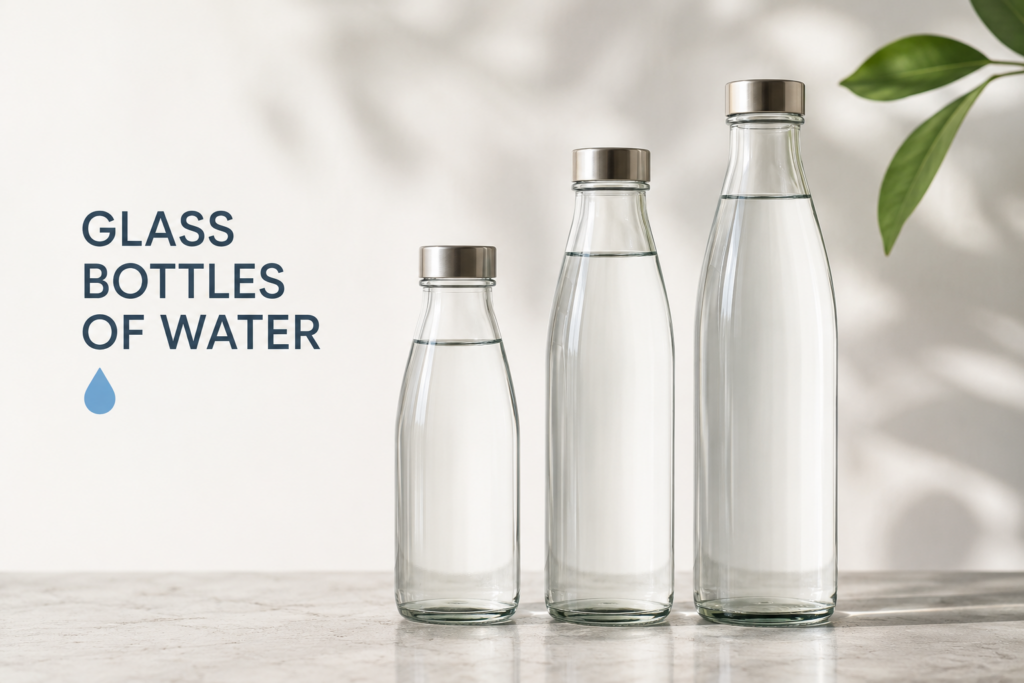
Glass bottles of water have become increasingly popular among consumers who value health, sustainability, and premium quality. Unlike plastic containers, glass preserves the natural taste of water without releasing unwanted chemicals or odors. Whether you’re purchasing bottled water for your business, developing a private-label product, or simply looking for a better hydration solution, understanding the different bottle dimensions is essential.
In today’s competitive beverage market, choosing the right glass bottles of water involves much more than selecting an attractive design. Factors such as bottle size, bottle height, capacity, transportation costs, and customer preferences all influence the purchasing decision.
This guide explores everything you need to know before selecting the ideal glass water bottle.
Glass Bottles of Water: Why They Stand Out
Glass has been used as a beverage packaging material for centuries, and for good reason. Modern manufacturers continue to invest in water glass bottles because they offer unmatched advantages.
- Pure Taste:Glass is completely non-porous and chemically stable. It does not absorb flavors or transfer odors, ensuring that every sip tastes exactly as intended.
- Environmentally Friendly:Glass is 100% recyclable and can be recycled repeatedly without losing quality. Many premium beverage brands choose glass bottles of water to strengthen their sustainability initiatives.
- Premium Brand Image:Consumers often associate glass packaging with luxury, quality, and safety. Restaurants, hotels, spas, and high-end retailers frequently prefer glass bottled water for its elegant appearance.
- Better Product Protection:Glass creates an excellent barrier against oxygen and moisture, helping preserve water quality during storage.
How Water Bottle Size Affects Customer Experience
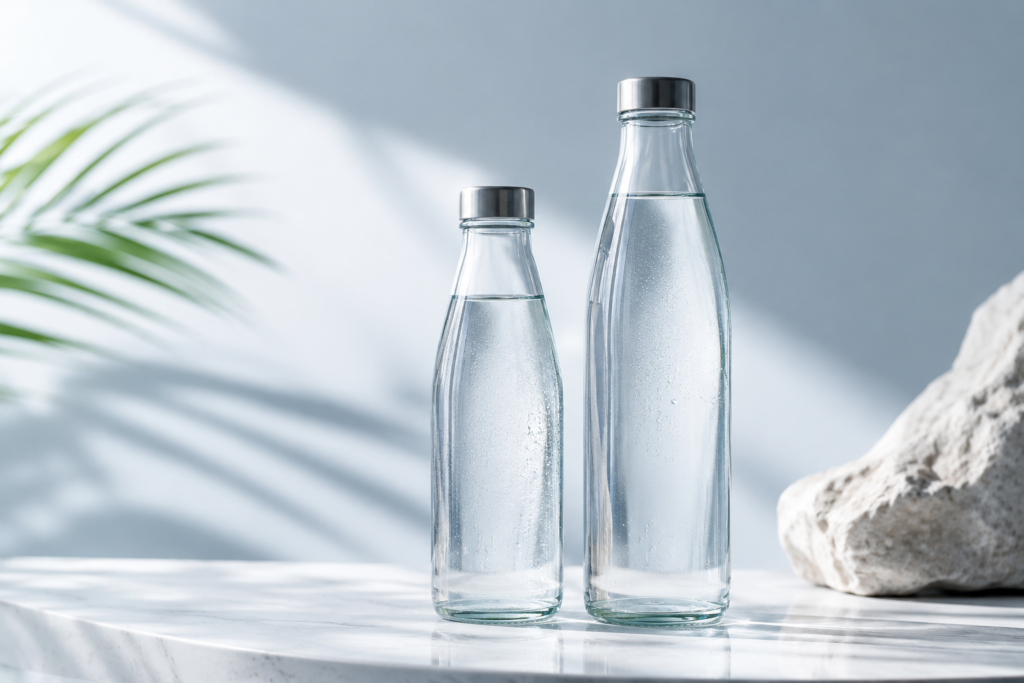
Selecting the correct bottle size depends on where and how the product will be consumed.
Different capacities serve different purposes:
| Water Bottle Size | Typical Use |
|---|---|
| 250 ml | Hotels, events, airline service |
| 330 ml | Restaurants and cafes |
| 500 ml | Daily hydration |
| 750 ml | Premium dining and hospitality |
| 1000 ml | Family dining and office use |
A smaller water bottle size is ideal for single servings, while larger bottles reduce packaging waste and are better suited for group settings. When selecting water glass bottles, businesses should match bottle capacity with customer expectations and distribution channels.
Why Water Bottle Height Matters for Packaging
Many buyers overlook water bottle height, but it plays a significant role in packaging efficiency.
- Shipping Efficiency:Bottle height determines how products fit into shipping cartons and pallets. Proper dimensions help reduce transportation costs.
- Retail Display:A carefully selected bottle height ensures products fit neatly on retail shelves while maintaining strong visual appeal.
- Refrigerator Compatibility:Consumers often store bottled water in refrigerators. Bottles with practical heights are easier to organize and access.
- Label Design:The available label area depends heavily on bottle height. Taller bottles generally provide more branding space for logos, nutritional information, and promotional graphics.
Choosing the Best Glass Bottles of Water for Different Markets
Not every market requires the same bottle design.
- Luxury hotels and restaurants often prefer elegant water glass bottles ranging from 500 ml to 750 ml with premium closures.
- Convenience stores generally sell 330 ml or 500 ml bottles that customers can carry easily.
- Businesses frequently purchase larger bottles to reduce replacement frequency and improve workplace sustainability.
- Many entrepreneurs choose customized water glass bottles to create distinctive branding and stand out in competitive markets.
Comparing Different Water Bottle Sizes
When evaluating water bottle size, consider these factors:
Small Bottles (250–330 ml)
Advantages:
- Lightweight
- Easy to carry
- Ideal for promotional events
Limitations:
- Less hydration
- Higher packaging cost per liter
Medium Bottles (500 ml)
Advantages:
- Most popular consumer choice
- Excellent balance between portability and capacity
- Suitable for retail sales
Large Bottles (750–1000 ml)
Advantages:
- Reduced packaging waste
- Premium appearance
- Better value for restaurants and offices
Sustainability Benefits of Glass Bottles of Water
Consumers increasingly support environmentally responsible packaging.
Compared with disposable plastics, glass bottles of water offer several sustainability advantages:
- Fully recyclable
- BPA-free
- Reusable for years
- Lower environmental impact over multiple use cycles
- Supports premium eco-friendly branding
Businesses adopting glass packaging often improve both customer perception and environmental performance.
Final Thoughts
Choosing the right glass bottles of water requires balancing aesthetics, functionality, sustainability, and operational efficiency. While bottle appearance is important, practical considerations such as water bottle size and water bottle height directly affect consumer convenience, shipping costs, shelf presentation, and overall brand value.
Whether you’re launching a premium bottled water brand, sourcing packaging for a hospitality business, or expanding a private-label product line, investing in high-quality glass bottles of water is a smart long-term decision. By carefully evaluating bottle dimensions, capacity, and design, businesses can create a packaging solution that enhances customer satisfaction while supporting sustainability goals.