
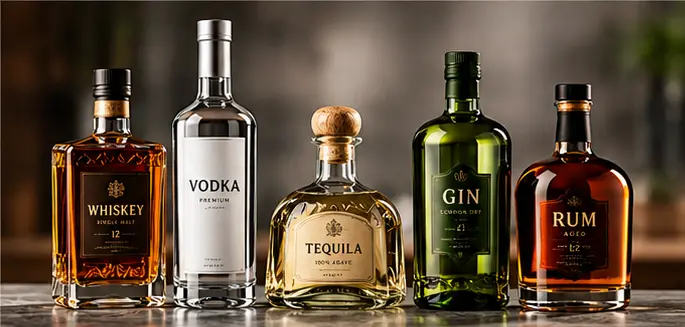
Choosing the right bottle is an important decision for any spirits brand. Glass packaging protects the product while communicating brand identity and attracting customers. Whether you are sourcing whiskey glass bottles, vodka bottles, tequila bottles, or packaging for other spirits, you need to consider more than appearance.
Bottle shape, glass quality, closures, decoration, order quantity, and shipping requirements all influence your purchasing decision. This guide explains the key factors to consider when sourcing custom glass liquor bottles.
Table of Contents
1. Choose the Right Bottle for Your Spirit
Different spirits brands have different packaging needs. The ideal bottle should reflect your brand positioning while remaining practical for production, filling, storage, and transportation.
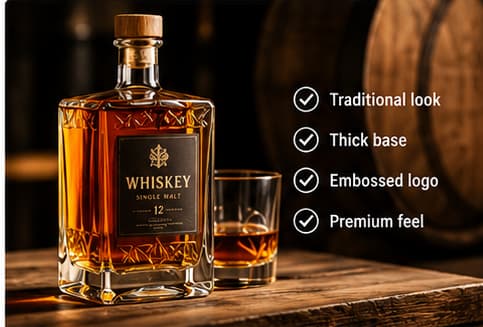
Whiskey and bourbon bottles
Whiskey packaging often emphasizes tradition and craftsmanship. Square bottles, rectangular designs, rounded shoulders, and thick bases can create a substantial appearance. Embossed logos and textured glass also help brands stand out without relying entirely on labels.
When choosing whiskey glass bottles, consider bottle weight, grip, closure compatibility, and available space for branding.
Vodka bottles
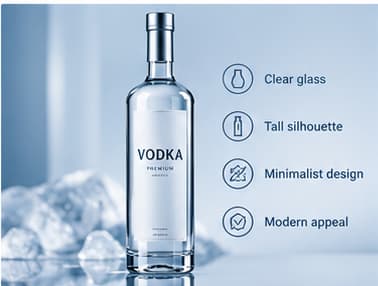
Vodka packaging often focuses on clarity and simplicity. Tall silhouettes, straight sides, geometric shapes, and transparent glass can create a clean, modern appearance. Premium brands may also consider distinctive proportions or decorative finishes.
The final design should balance appearance with cost and filling-line compatibility.
Tequila and other spirits bottles
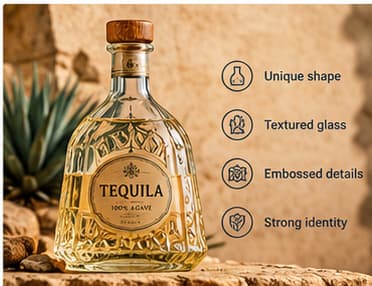
Tequila and mezcal brands may use distinctive shapes, textured glass, or embossed details to communicate their identity. Gin, rum, and brandy brands also have different packaging preferences, ranging from minimalist designs to more decorative bottles.
The best bottle is not necessarily the most complicated. It should suit your product, target market, brand image, and budget.
2. Stock Bottles vs. Custom Glass Bottles
One of the first sourcing decisions is whether to use an existing bottle design or develop a custom mold.
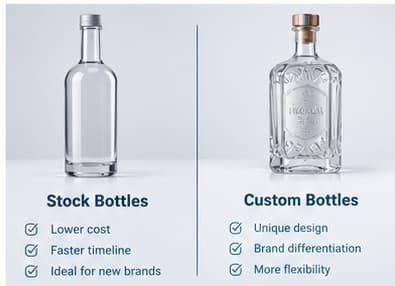
Stock glass bottles use existing molds and can help reduce initial development costs. They are often suitable for new brands, shorter development timelines, or projects with limited initial quantities. Labels, closures, and decoration can still create a distinctive look.
Custom glass bottles allow greater design flexibility, including unique silhouettes and embossed brand logos. They may be suitable for brands that want recognizable packaging or have specific design requirements.
However, custom development can involve mold costs, sampling, design revisions, and additional planning. Ask your supplier about tooling expenses, production feasibility, and expected order quantities before proceeding.
Depending on the design, modifying an existing bottle may also be an option. Confirm which changes are possible and whether new tooling is required.
Explore Valiant’s glass bottle customization services to learn more about available options.
3. Consider Glass Color, Shape, and Weight
The bottle’s appearance should support your brand while meeting practical requirements.
- Glass color: Clear glass showcases the spirit’s natural color. Amber, green, and other colored glass options can create different visual effects. Consider your branding and any applicable product protection requirements.
- Bottle shape: Round, square, and rectangular bottles offer different visual styles and handling characteristics. Unusual designs may improve recognition but should also be evaluated for storage and packing efficiency.
- Bottle weight: Heavier glass can create a premium feel, but it increases material use and shipping weight. Consider whether the additional weight provides enough value for your brand.
- Glass quality: Discuss clarity, dimensional consistency, and acceptable defects with your supplier. Important quality requirements should be included in the agreed specifications.
The goal is to balance visual appeal, functionality, manufacturability, and total cost.
4. Select Closures and Decoration
Bottle closures and decoration should be selected together to ensure compatibility and a consistent appearance.
Closures: Depending on the bottle design, options may include screw caps, cork-style closures, and other suitable sealing systems. Confirm the neck finish, closure dimensions, and sealing performance. Test compatibility with physical samples before mass production.
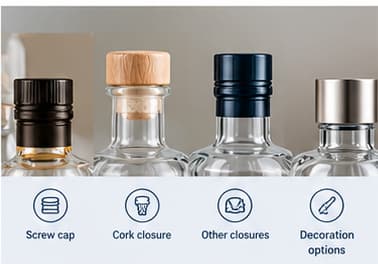
Decoration options: Common techniques include:
- Screen printing: Applies graphics directly to the glass.
- Spray coating: Creates selected colors and matte or glossy finishes.
- Labeling: Provides flexibility for brand graphics and product information.
- Hot stamping: Adds metallic decorative effects.
- Acid etching: Creates a frosted appearance on suitable glass surfaces.
The best option depends on your design, budget, order quantity, and production requirements. Ask your supplier about sample approval, durability, and feasibility before finalizing the decoration.
5. What to Confirm Before Ordering
Providing clear specifications helps suppliers prepare accurate quotations and reduces unnecessary changes.
Before ordering wholesale liquor bottles, confirm the following:
- Capacity and dimensions: Specify the required volume and bottle size.
- Design: Provide reference images, drawings, or a physical sample if available.
- Glass color and weight: Identify your preferences and essential requirements.
- Closure: Confirm the bottle neck finish and intended closure system.
- Decoration: Share logo files, artwork, colors, and label dimensions.
- Quantity: State the initial order volume and expected repeat orders.
- Destination market: Identify the intended market and applicable packaging or labeling requirements.
- Packaging and shipping: Discuss cartons, dividers, palletization, and delivery terms.
- Quality standards: Agree on inspection criteria and sample approval before production.
If some details are not finalized, tell your supplier which requirements remain flexible. This helps identify practical alternatives.
6. Plan Production and Shipping
Request physical samples to review the bottle shape, finish, closure fit, and label placement. Where necessary, test samples with your filling equipment before approving mass production.
For custom molded bottles, clarify the mold development process, sample revisions, responsibilities, and estimated production schedule.
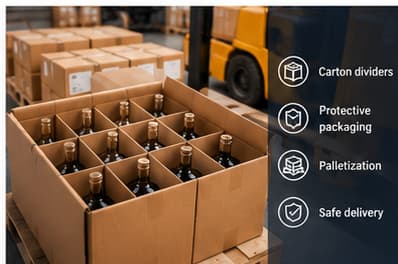
Shipping should also be considered early. Glass bottles need suitable protective packaging to reduce movement and breakage during handling. Carton dividers, appropriate packaging materials, and palletization can help protect products during transportation.
When comparing quotations, look beyond the unit price. Consider mold costs, closures, decoration, secondary packaging, freight, and other charges included in the delivery terms.
7. How to Choose a Glass Bottle Supplier
A reliable supplier should understand both design requirements and production considerations.
When evaluating suppliers, consider:
- Experience with spirits packaging and similar bottle designs
- Availability of stock bottles and custom mold development
- Decoration and finishing capabilities
- Sample approval and quality inspection procedures
- Clear quotations and production schedules
- Experience with export packaging and your destination market
For a fair comparison, send suppliers the same specifications and ask them to quote on the same basis.
Explore Valiant’s spirits glass bottle collection to review bottle options for different spirits applications.
Frequently Asked Questions
Are stock glass bottles suitable for new brands?
Yes. Stock bottles can reduce initial development costs and help brands get started without developing a new mold. Labels, closures, and decoration can still create a distinctive package.
When should I choose a custom bottle mold?
Consider a custom mold when a unique shape or embossed branding is important to your product positioning and expected order volume. Evaluate tooling costs and long-term plans before deciding.
What information is needed for a quotation?
Provide the bottle capacity, design reference, glass color, closure requirements, decoration details, quantity, destination, and packaging preferences.
How can I reduce bulk glass bottle costs?
Consider suitable stock designs, simplify unnecessary decoration, optimize bottle weight and carton dimensions, and plan order quantities carefully. Compare total purchasing and delivery costs rather than unit price alone.
Start Your Glass Liquor Bottle Project
The right bottle combines brand identity with practical manufacturing and packaging requirements. By defining specifications early, reviewing samples, and comparing suppliers consistently, you can make better sourcing decisions.
Whether you need whiskey glass bottles, vodka packaging, custom tequila bottles, or a broader spirits range, Valiant can help you explore bottle options and customization possibilities.
Explore Valiant’s spirits bottle collection or contact Valiant to discuss your requirements and request a quotation.
Custom Glass Liquor Bottles: A Buyer’s Guide
Everything You Need to Know to Source the Right Glass Bottles for Your Spirits Brand