
Table of Contents
Abstract
As 2026 mandates like EU’s PPWR and China’s tax shifts redefine the industry, Valiant Glass pivots from supplier to strategic partner. Our report explores the transition toward NNPB lightweighting, tactile glass embossing, and label-less branding. By integrating solar-powered manufacturing with IoT-enabled closures, Valiant ensures global compliance while driving premium brand value in a green era.
In this context, we present an analysis of the 2026 Bottle Design Trends that will shape the spirits industry.
The Ultimate 2026 Spirits Packaging Report: Unrivaled Mastery in Glass Bottle Manufacturing and Elite Global Compliance
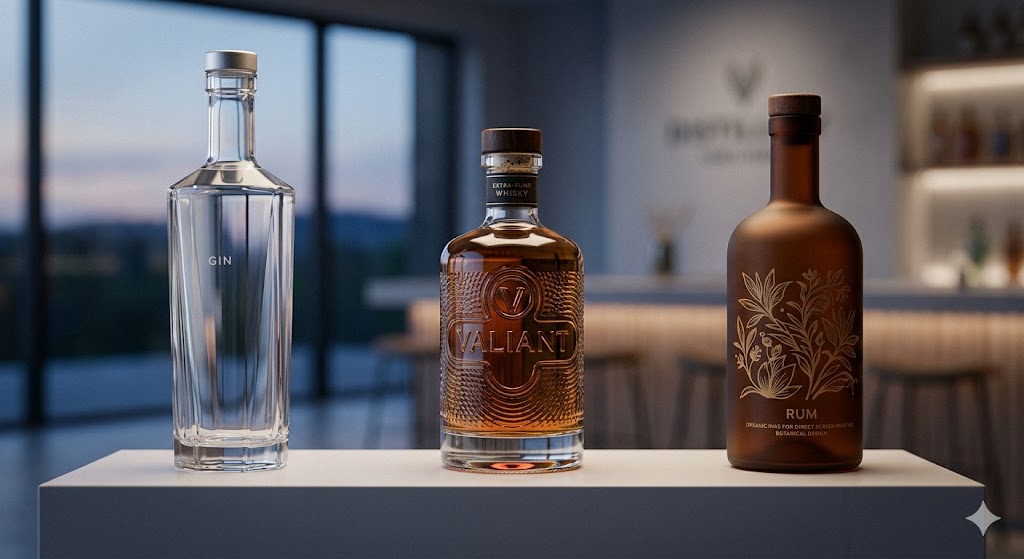
In the highly competitive world of glass bottle manufacturing, 2026 stands as a defining year for innovation and strategic survival. For distilleries and premium brand owners, packaging is no longer just a container; it is the frontline defense against geopolitical cost shifts and aggressive environmental mandates. With the full enforcement of the EU Packaging and Packaging Waste Regulation (PPWR)and the abolishment of export tax rebates for glass products in China, the core logic of the industry has evolved. We are moving from “volume-based pricing” to a “technological hedging” model within the realm of high-end glass bottle manufacturing.
According to the latest technical audit from Valiant Glass, a leader in sustainable glass bottle manufacturing, the adoption of NNPB (Narrow Neck Press and Blow) technology is the game-changer of the decade. This process allows for ultra-lightweight designs that reduce glass material usage by over 20% while maintaining the “Super Flint” clarity that luxury brands demand. By optimizing wall thickness distribution, modern glass bottle manufacturing now enables brands to slash their carbon footprint and logistics costs simultaneously—a critical advantage in an era where “heavy” is no longer the only synonym for “luxury.”
The future of spirits packaging in 2026 is also defined by a “label-less” revolution. To satisfy strict circular economy requirements, more brands are integrating their identity directly into the glass through advanced embossing and laser etching. Our internal design team at Valiant Glass suggests that these tactile textures create a deeper sensory connection with consumers than traditional paper labels ever could. Furthermore, the selection of accessories has moved into a “Total Lifecycle” phase. We recommend that brands only source from glass bottle manufacturing partners who provide FDA and ISO 7086 certified components, ensuring safety and anti-counterfeit security.
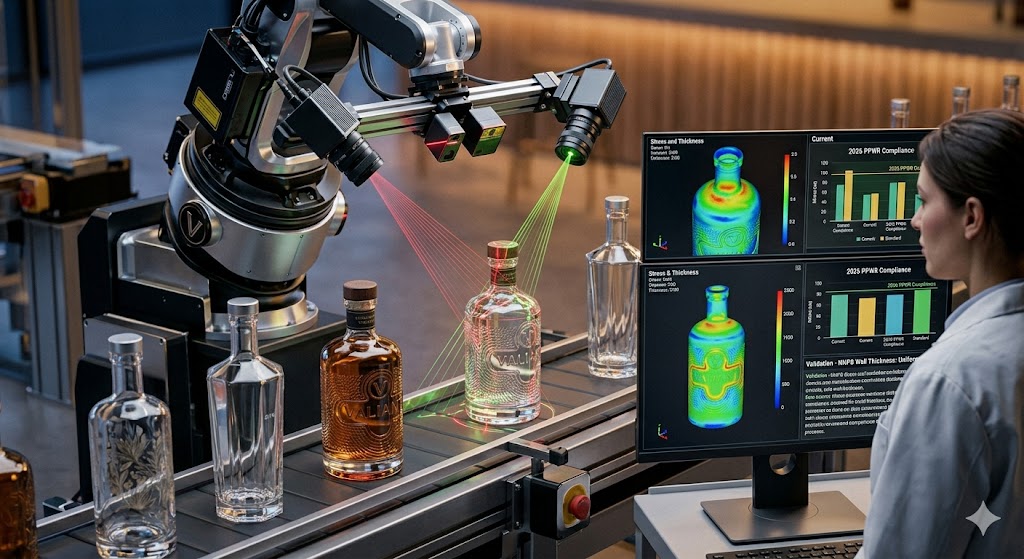
2026 Strategic Process & Brand Value Matrix
| Process Combination | Visual/Tactile Characteristics | 2026 Compliance Rating | RatingCost Impact Factors | Suggested Use Case |
| NNPB Lightweighting | Ultra-thin walls, extreme clarity | 5/5 (PPWR Compliant) | Higher initial mold cost; 15% logistics savings | Mass-market global spirits |
| Super Flint + Deep Embossing | Brilliant refraction, tactile grip | 4/5 (Single Material) | High impact from tax rebate changes | Premium Cognac/Vodka |
| Label-less Silk Screening | 360-degree vision, seamless look | 5/5 (Easy to recycle) | Replaces paper labels; lowers labor | Modern craft gin/liqueurs |
| PCR (Recycled Glass) | Vintage green/amber, grainy texture | 5/5 (Circular Economy) | Stable material costs | Sustainability-themed editions |
From a procurement perspective, the relationship between a brand and its glass bottle manufacturing partner has become more complex. The policy shifts in China have caused significant FOB price volatility, catching “price-first” buyers off guard. Successful brands are now seeking integrated solutions where the manufacturer acts as a “supply chain shock absorber.” As noted in the Towardspackaging 2026 outlook, dominance in the market will belong to those who can master the “bottle + closure + decoration” trifecta under one roof.
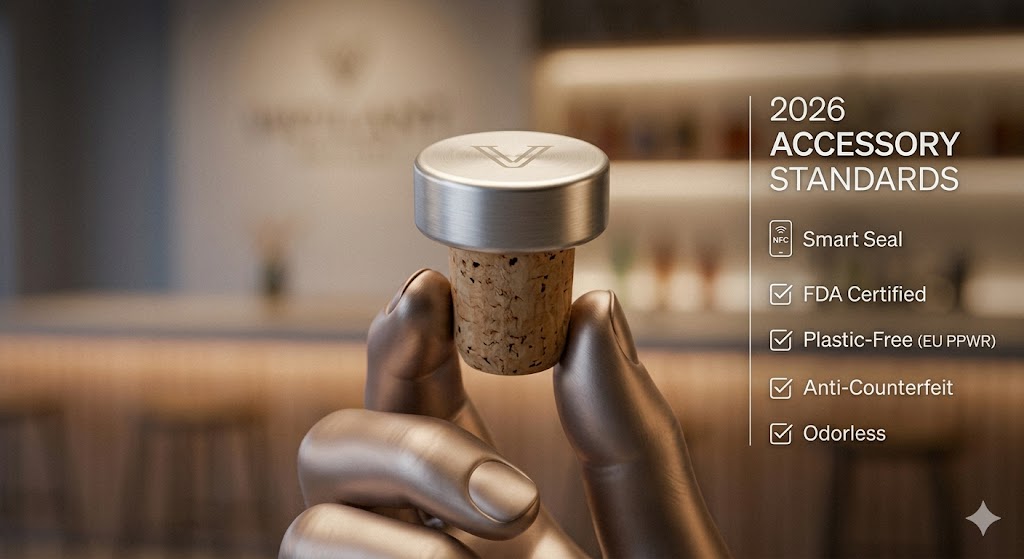
2026 Global Market Access & Quality Audit
| Key Dimension | EU Market | North America (USA) | Emerging Markets | Valiant Glass Solution |
| Carbon Footprint | Mandatory disclosure | Impacts ESG Rating | Focus on degradability | Solar/Wind-powered production |
| Heavy Metals | Strict 100ppm limit | FDA 21 CFR Standards | BS 6748 Compliance | Lead-free & Chrome-free raw materials |
| Cullet (Recycled) Ratio | Suggested ≥25% | Increasing ratio targets | Focus on circularity | High-ratio PCR glass solutions |
| Packaging Strength | ISTA 3A Drop Test | ISTA 2A Standard | Standard Pallet Test | Optimized volume & durability |
Technical Mastery: How Valiant Glass Redefines the Future of Glass Bottle Manufacturing
Looking beyond the current year, the philosophy of glass bottle manufacturing is transforming the bottle from an industrial vessel into a “digital asset.” At Valiant Glass, our consensus is clear: the luxury of the future must not be built on the depletion of natural resources. In our roadmap, the production line is a fusion of physics and data.
We are utilizing AI-simulated stress cooling to push physical limits, attempting to reduce wall thickness to unprecedented thresholds without losing structural integrity. This challenge to the limits is a preparation for potentially stricter global carbon taxes in 2027. Simultaneously, Valiant plans to elevate the use of Post-Consumer Recycled (PCR) glass. We want our bottles to be not only beautiful but to have a “green resume.” With our 8.4MW wind power system and the closed-loop recycling protocols under development, Valiant’s vision is to achieve “life-cycle negative emissions” for every bottle.
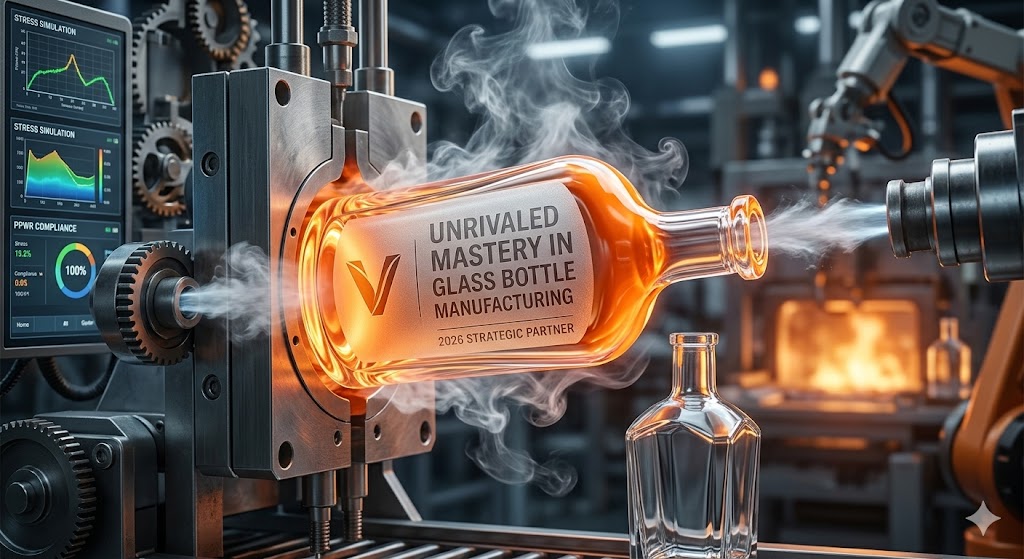
Strategic Summary: Winning the Market with Advanced Glass Bottle Manufacturing
In summary, the spirits market post-2026 no longer allows for “simple cost control”—it demands “deep technical integration.” Whether dealing with the sting of tax rebate cancellations or finding room to breathe within the PPWR framework, the essence is a test of a manufacturer’s resilience.
Valiant Glass’s approach is clear: we have transitioned from an “order-taking factory” to a “supply chain shock absorber.” Faced with policy volatility, we use NNPB technology to “recover” costs for customers at the logistics end. Faced with compliance hurdles, we use our in-house labs to provide zero-risk backing for brands entering high-standard markets like the EU and North America. Moving forward, we will continue to deepen our integrated model, breaking down communication barriers between glass, accessories, and processing. Our conclusion is simple: in an uncertain era, Valiant Glass provides certainty. The winners of the future will be the brands that dare to subtract from packaging, add to technology, and multiply their sense of responsibility.