
Abstract
In the modern food and beverage industry, packaging is far more than a logistical necessity; it is a critical safeguard for product integrity and a silent ambassador for your brand. While alternative materials like PET and aluminum have seen widespread use, glass continues to be the preferred choice for premium brands and safety-conscious manufacturers. This preference isn’t just traditional—it’s rooted in rigorous science and global regulatory demands.
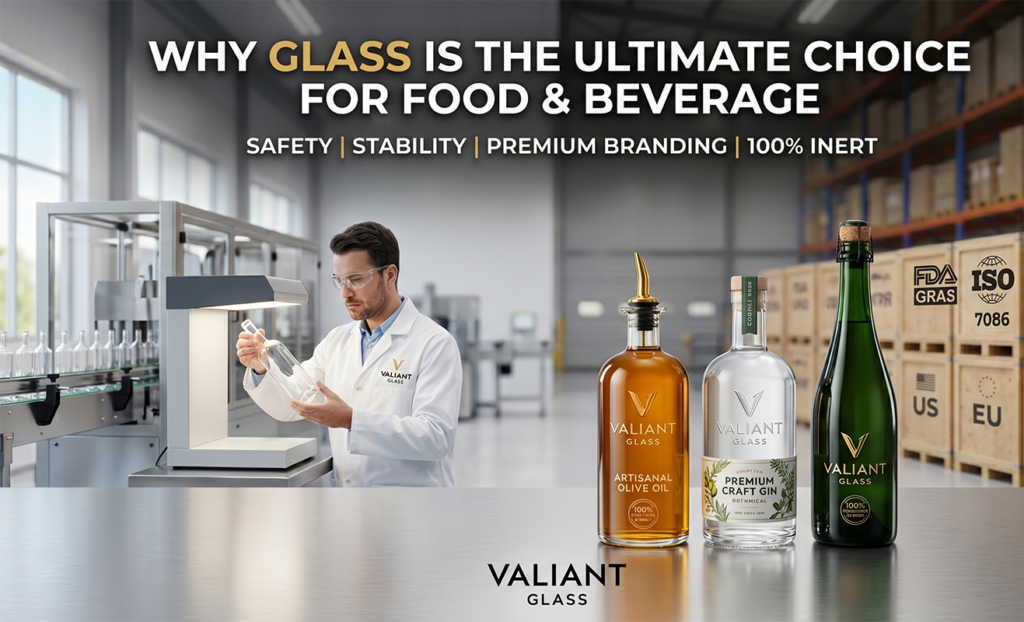
Inertness: Zero chemical migration ensures flavor purity.
Safety: The only “GRAS” certified material by the FDA.
Barriers: 100% impermeable to oxygen, extending shelf life.
Value: Higher perceived quality leading to better retail margins.
The “Zero Migration” Advantage: Maintaining Chemical Purity
The primary technical concern for any food producer is chemical leaching. Unlike plastic containers, which can release phthalates or BPA into the contents—especially when exposed to UV light or varying temperatures—glass is chemically inert. This stability ensures that the beverage inside tastes exactly as the formulator intended, with no “plastic” aftertaste or chemical contamination.
From a regulatory standpoint, this is a massive operational shortcut. The U.S. Food and Drug Administration (FDA) officially designates glass as Generally Recognized as Safe (GRAS), a status not automatically granted to complex polymers. For international exporters, this means fewer hurdles during customs and safety audits.
Engineering the Ultimate Barrier Against Oxidation
Oxygen is the primary catalyst for spoilage in juices, oils, and fermented beverages. While PET bottles are technically porous at a microscopic level, allowing oxygen to slowly seep in over time (known as the Oxygen Transmission Rate, or OTR), glass is an absolute barrier.
| Packaging Material | Oxygen Permeability | Best Suited For |
| Glass | Effective Zero | Spirits, Wine, Oils, Premium Sodas |
| PET Plastic | Low to Moderate | Short shelf-life beverages |
| Aluminum | High (if uncompromised) | Carbonated soft drinks |
By utilizing glass, manufacturers can often reduce the need for artificial preservatives, appealing to the “Clean Label” trend. Professional quality control requires checking the ASTM International standards for glass containers to ensure the thickness and annealing are sufficient to handle high-speed vacuum filling lines.
Sustainable Growth Through Circular Economy Design
The global shift toward a circular economy has made glass even more relevant. Unlike most plastics that are “downcycled” into lower-quality products, glass is a “cradle-to-cradle” material. It can be crushed into cullet and remelted infinitely without any loss in its structural or chemical integrity.
The European Commission highlights this in their food contact materials framework, emphasizing that reusable and highly recyclable materials are essential for reducing environmental impact. For a brand, using glass is a visible commitment to sustainability that resonates with the modern, eco-conscious consumer.
Premium Perception and its Impact on Retail Margins
In the B2B supply chain, the weight and tactile feel of glass serve as a psychological cue for quality. A consumer is statistically more likely to associate a glass bottle with health, luxury, and freshness. This allows brands to command a premium price point that often covers the increased logistics costs associated with glass.
Beyond the raw material, specialized treatments such as https://www.vitglassbottle.com/product-category/spirits-bottles/ or unique https://valiantbottles.com/ techniques can turn a standard bottle into a collector’s item. In highly competitive sectors like craft spirits or artisanal olive oil, the bottle shape itself becomes a trademarked asset.
Strategic Sourcing: Ensuring Quality for Global Export
For procurement managers, sourcing glass involves more than just price comparison. It requires a partner who understands the rigors of international shipping and the technical nuances of glass stress.
- Leaching Tests: Does the glass meet ISO 7086-1:2019 standards for lead and cadmium release?
- Filling Line Compatibility: Is the finish (the bottle neck) precise enough to prevent leaks in automated capping systems? https://www.vitglassbottle.com/quality-control/
- Damage Mitigation: Is the packaging designed for long-haul sea freight? High-density dividers and high-quality pallets are non-negotiable for minimizing breakage.
- Scalability: Can the manufacturer handle the transition from {INTERNAL:GET_SAMPLES} to full-scale container shipments without quality drift?
Expert Perspectives: Common Industry Questions
Is the environmental impact of glass manufacturing higher than plastic? While the energy required for melting glass is high, its infinite recyclability and the fact that it doesn’t break down into microplastics make it a far superior long-term environmental choice. According to the Glass Packaging Institute (GPI), using 10% more cullet (recycled glass) can reduce carbon emissions by about 5%.
How do you manage the weight factor in export costs?
Smart palletization and choosing the right glass weight (lightweighting technology) can significantly optimize freight costs without compromising the bottle’s strength.
Partnering with Valiant Glass for Your Packaging Needs
At Valiant Glass, we don’t just manufacture containers; we engineer packaging that protects your brand’s reputation. Our expertise in export-grade glass ensures that your food or beverage product remains safe, compliant, and visually stunning.
从From initial design to final delivery, our team focuses on the technical details that matter most to procurement professionals: thermal shock resistance, heavy metal compliance, and logistical efficiency.