
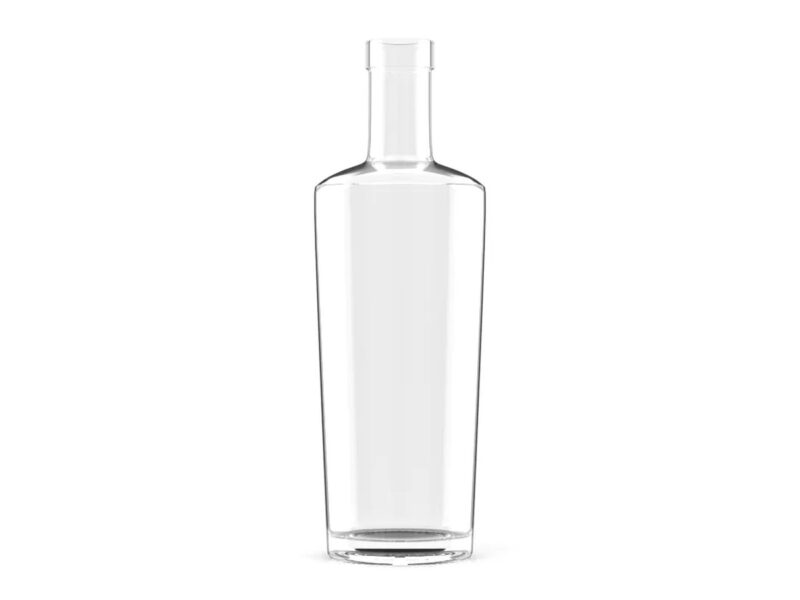
Ordering glass liquor bottles in bulk looks simple — pick a shape, agree on a price, place the order. In practice, most expensive problems show up after the deposit is paid: bottles that don’t fit your filling line, corks that leak, colors that shift between the sample and mass production, and breakage rates that eat your margin.
This checklist covers the nine things experienced spirits brands, distilleries, and importers verify before placing a bulk order. Work through it in order, and get every answer in writing from your supplier before you pay.
1. Capacity and Market Format
Start with the fill volume your market expects. The standard spirits formats are 700ml for most of Europe, 750ml for the US and much of the Americas, and 1L / 1.75L for value and duty-free lines. Miniatures (50ml–100ml) follow different tooling and closure rules.
Confirm three numbers, not one:
- Nominal capacity — the labeled volume (e.g., 750ml)
- Brimful capacity — the volume to the very top, which determines headspace
- Fill point — where the liquid sits at nominal volume, which affects how the bottle looks on the shelf
A bottle that is “750ml” on paper but leaves an unusually large headspace will look half-empty next to competitors.
2. Glass Grade and Clarity
Not all clear glass is equal. Ask which grade the quote is based on:
- Super flint — the clearest grade, near-crystal appearance, standard for premium vodka, gin, and tequila
- High flint — good clarity at a lower cost, common for mid-range spirits
- Regular flint — slight green/grey tint, acceptable for colored spirits and budget lines
Also confirm the bottle weight. Heavier glass (e.g., 600g+ for a 750ml bottle) signals premium positioning but raises freight cost per container. Get the weight tolerance in writing — a ±5% swing changes both shelf feel and shipping cost.
3. Neck Finish and Closure Compatibility
This is the most common cause of production delays. Your bottle’s neck finish must match your closure exactly — cork (T-cork / bartop), screw cap (ROPP), Guala, or GPI finishes all have specific dimensions.
Before ordering:
- Get the finish drawing (technical datasheet) from the bottle supplier
- Send it to your closure supplier and your filling-line operator for confirmation
- If you plan to use a standard stock bottle, ask which closures the factory has already tested on it
Never assume a “standard cork finish” means the same thing to two different factories.
4. Decoration Method and Its Limits
Decide decoration before finalizing the bottle, because the bottle’s shape limits what is possible:
- Screen printing — durable, no label needed, best on flat or gently curved surfaces
- Decals / hot stamping — fine detail and metallic effects, higher unit cost
- Spray coating / frosting — full-color or matte finishes, confirm food-contact and alcohol-resistance testing
- Embossing — built into the mold, only possible with a custom mold
Ask for a decorated sample on the actual bottle — not a photo — and check print adhesion with a simple scratch and alcohol-rub test.
5. MOQ: Stock Bottle vs. Custom Mold
Minimum order quantity changes completely depending on your route:
- Stock bottles — usually from around 6,000–10,000 pieces, ready in days to a few weeks
- Custom mold bottles — mold development typically takes 10–15 days after drawing approval, and economical production runs start much higher
If a quote looks unusually cheap for a custom shape, check whether the MOQ, mold fee, and decoration are actually included — or listed separately later.
6. Samples and Pre-Production Approval
Never skip the sample stage, even for stock bottles. Order samples to check:
- Clarity, color consistency, and surface defects (seeds, bubbles, stones)
- Closure fit and sealing
- Label or print area dimensions
- How the filled bottle looks under retail lighting
For custom molds, insist on a pre-production (T1) sample and a signed approval before mass production starts. Approving a 3D render is not the same as approving glass.
7. Quality Control Standards
Ask the factory how it controls quality, and put the answers in your purchase order:
- Annealing — properly annealed bottles resist thermal shock and breakage on filling lines
- Inspection — automated camera inspection plus manual checks; ask about the AQL level used for acceptance (AQL 2.5 is a common benchmark)
- Testing — internal pressure, thermal shock, and vertical load tests matter for carbonated or heavy bottles
- Defect photos — a serious factory can show you its defect classification standard
8. Packaging, Palletizing, and Breakage
Glass is heavy and fragile — packaging decides how much of your order arrives sellable. Confirm:
- Carton vs. bulk pallet packing, and the divider type (cardboard, plastic, shrink-wrapped trays)
- Bottles per pallet and pallets per 20ft / 40ft container
- Who carries the risk for transit breakage, and what breakage rate the factory guarantees (≤2% is a reasonable benchmark for well-packed export orders)
For a deeper breakdown of freight math, factor bottle weight, pallet configuration, and container utilization together — the cheapest unit price often produces the most expensive landed cost.
9. Lead Time and Landed Cost
Finally, build the full timeline and the full cost:
- Sampling: 5–7 days for stock bottles; longer for decorated samples
- Mold development (if custom): 10–15 days after drawing approval
- Mass production: typically 25–45 days depending on quantity and decoration
- Sea freight and customs: plan your buffer around your launch date, not the factory’s ship date
Compare suppliers on landed cost per sellable bottle — unit price + decoration + packaging + freight + expected breakage — not on unit price alone.
Quick Checklist (Copy Before You Order)
- ☐ Capacity, brimful volume, and fill point confirmed
- ☐ Glass grade (super flint / high flint) and bottle weight in writing
- ☐ Neck finish drawing checked against your closure and filling line
- ☐ Decoration method tested on a physical sample
- ☐ MOQ, mold fee, and what the quote includes/excludes clarified
- ☐ Physical samples approved; T1 sample signed for custom molds
- ☐ QC standard and AQL level written into the PO
- ☐ Packing method, pallet count, and breakage responsibility agreed
- ☐ Full timeline and landed cost calculated
FAQ
What is a typical MOQ for glass liquor bottles?
For stock designs, most Chinese factories start around 6,000–10,000 pieces per design. Custom-mold bottles require a mold fee and higher production volumes to be economical.
How long does a bulk order take?
Stock bottles can ship in 1–3 weeks. A custom project — drawing, mold, samples, production — typically takes 8–12 weeks in total before shipping.
Should I choose a stock bottle or a custom mold?
Choose stock if you need speed and lower upfront cost. Choose a custom mold if shelf differentiation justifies the mold fee and longer timeline — the bottle itself becomes part of your brand.
Talk to Valiant Before You Order
Valiant Packaging manufactures stock and custom glass liquor bottles for spirits brands in 30+ countries — from 750ml super flint bottles with cork finish to fully bespoke molds with embossing and decoration. Browse our liquor bottles range, see a best-selling example with free samples, check our design-to-delivery services, or send us your checklist answers for a factory-direct quotation.
Recent Comments