
Table of Contents
Meta Description:
Discover how 3D Printing accelerates glass bottle sampling, reduces mold costs, shortens development cycles, and helps spirits brands launch products faster with customized packaging solutions.
The Growing Demand for Faster Glass Bottle Development
In today’s competitive spirits packaging market, speed matters more than ever. Whether launching a new whisky, vodka, tequila, rum, or premium liquor brand, companies need packaging development to move quickly without sacrificing quality. Traditional bottle development methods often require long lead times, expensive mold modifications, and repeated physical sampling before mass production can begin.
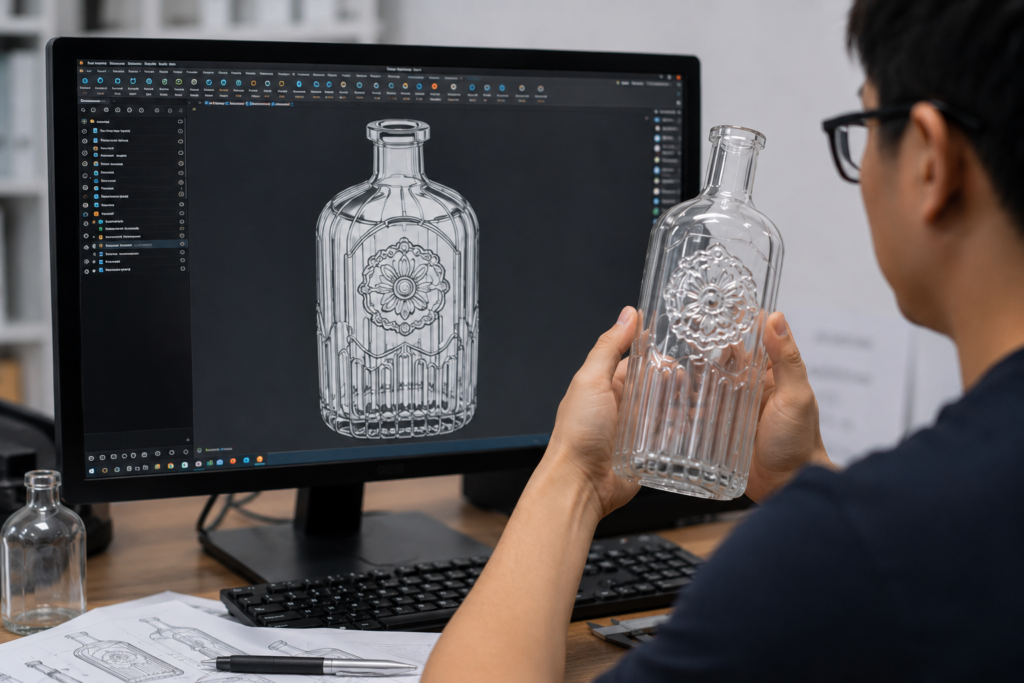
For glass bottle manufacturers and liquor brands, 3D Printing provides a faster, more flexible, and highly efficient approach to bottle sampling and prototype development. Instead of waiting weeks for traditional mold preparation, brands can now validate bottle structures, shapes, embossing details, and decoration concepts within days. As more premium spirits brands focus on packaging differentiation, 3D Printing has become an essential tool in modern glass bottle manufacturing. According to Formlabs, rapid prototyping technologies such as 3D Printing can significantly reduce product development timelines and improve design verification efficiency across manufacturing industries.
Why Traditional Sampling Slows Down Projects
Traditional glass bottle sampling usually involves several complicated production stages, including technical drawing confirmation, mold manufacturing, trial production, and repeated sample adjustments. For customized liquor bottles, this process can easily take several weeks or even months. If a customer wants to change the bottle shoulder, base thickness, neck finish, or embossing details, the mold may need to be modified again, increasing both production costs and development time.
In the premium spirits industry, packaging is directly connected to brand image and shelf appeal. Delays in bottle sampling can slow down product launches, distributor presentations, trade show preparation, and seasonal marketing campaigns. Many spirits brands are now looking for faster and more reliable development solutions, which is why 3D Printing is becoming increasingly popular in the glass packaging sector.
How 3D Printing Improves Bottle Sampling
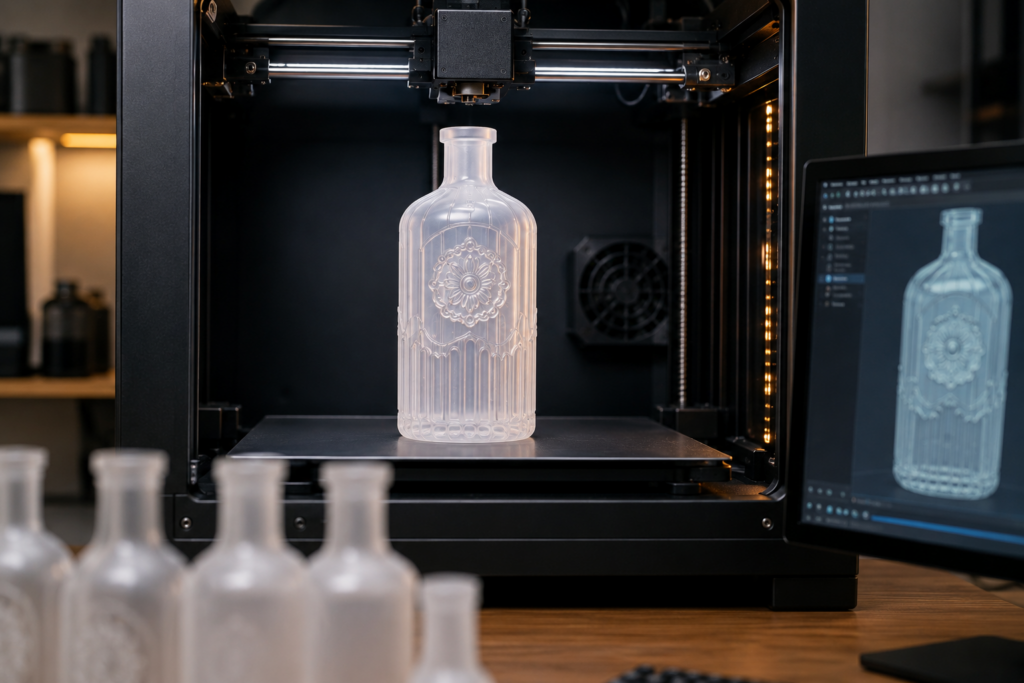
With modern technology, manufacturers can create highly accurate bottle prototypes before final mold production begins. Instead of investing immediately in expensive steel molds, designers first build digital 3D models that can quickly be transformed into physical samples through industrial 3D Printing equipment.
These prototypes allow customers to evaluate bottle proportions, ergonomic handling, embossing details, closure compatibility, and decoration concepts before mass production starts. Traditional bottle sampling may require 15–30 days depending on mold complexity, while printing prototypes can often be completed within just 1–3 days. This faster turnaround helps liquor brands move projects forward much more efficiently.
| Process Factor | Traditional Sampling | 3D Printing Sampling |
| Prototype Lead Time | 15–30 Days | 1–3 Days |
| Mold Investment | Required Early | Delayed Until Approval |
| Design Flexibility | Limited | Very High |
| Revision Speed | Slow | Fast |
| Development Cost | Higher | Lower |
Better Accuracy and Lower Development Costs
Another major advantage of 3D Printing is improved design accuracy and better cost control. Premium spirits bottles often include unique structures, deep embossing, heavy bases, or customized shapes that can be expensive to modify once mold production has started. By using 3D Printing during the early development stage, manufacturers and customers can identify design issues before investing in final tooling.
According to Autodesk, digital prototyping with 3D Printing improves design precision and allows manufacturers to optimize products before mass production begins. Physical prototypes also improve communication because customers can directly inspect and hold the bottle instead of relying only on 2D drawings or renderings. This reduces misunderstandings and shortens approval cycles significantly.
The Future of 3D Printing in Glass Packaging
As consumer demand for premium and customized spirits packaging continues growing, 3D Printing is becoming an essential part of modern glass bottle manufacturing. Brands want faster development cycles, stronger packaging identity, and lower project risk while maintaining high-end visual appeal. By integrating 3D Printing into the sampling process, glass bottle manufacturers can accelerate product development, improve flexibility, and help brands bring innovative packaging concepts to market much faster.
At VALIANT, we use advanced 3D Printing technology to support custom spirits bottle development, rapid sampling, mold optimization, and one-stop glass packaging solutions for global liquor brands.
Leave a Reply