
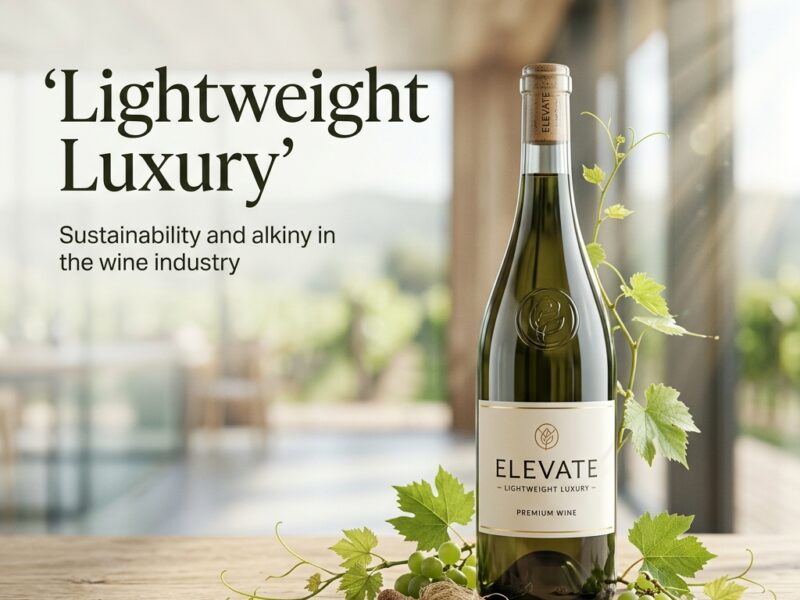
Lightweight Luxury is the defining paradigm shift for the global glass packaging industry as we move toward 2026. This movement represents the structural decoupling of “physical mass” from “perceived value,” a transition necessitated by escalating carbon taxes, volatile energy costs, and a radical transformation in consumer ethics. For decades, the wine and spirits industry relied on the “heavy bottle” as a shorthand for quality, but the modern marketplace now identifies excessive weight as a “carbon debt” rather than a premium signal. As a global leader in glass manufacturing, Shandong Valiant Packaging recognizes that the future of the circular economy rests on our ability to engineer containers that are light on the planet but heavy on brand impact. This report analyzes how the integration of advanced forming technologies and geometric optimization is making the 420g bottle the new global benchmark for high-end beverages.
Decoding the Global Momentum Toward Lightweight Luxury
The primary catalyst for the industry’s shift toward Lightweight Luxury is the Sustainable Wine Roundtable (SWR) Bottle Weight Accord (BWA). Launched in late 2023, the BWA has rapidly expanded to include over 20 major global signatories—including retail giants like Whole Foods and governmental monopolies like SAQ—collectively responsible for over 2.5 billion bottles annually, or roughly 9% of global wine sales. The objective of this accord is a firm mandate to reduce the average weight of a 75cl still wine bottle from the traditional 550g average to below 420g by the end of 2026.
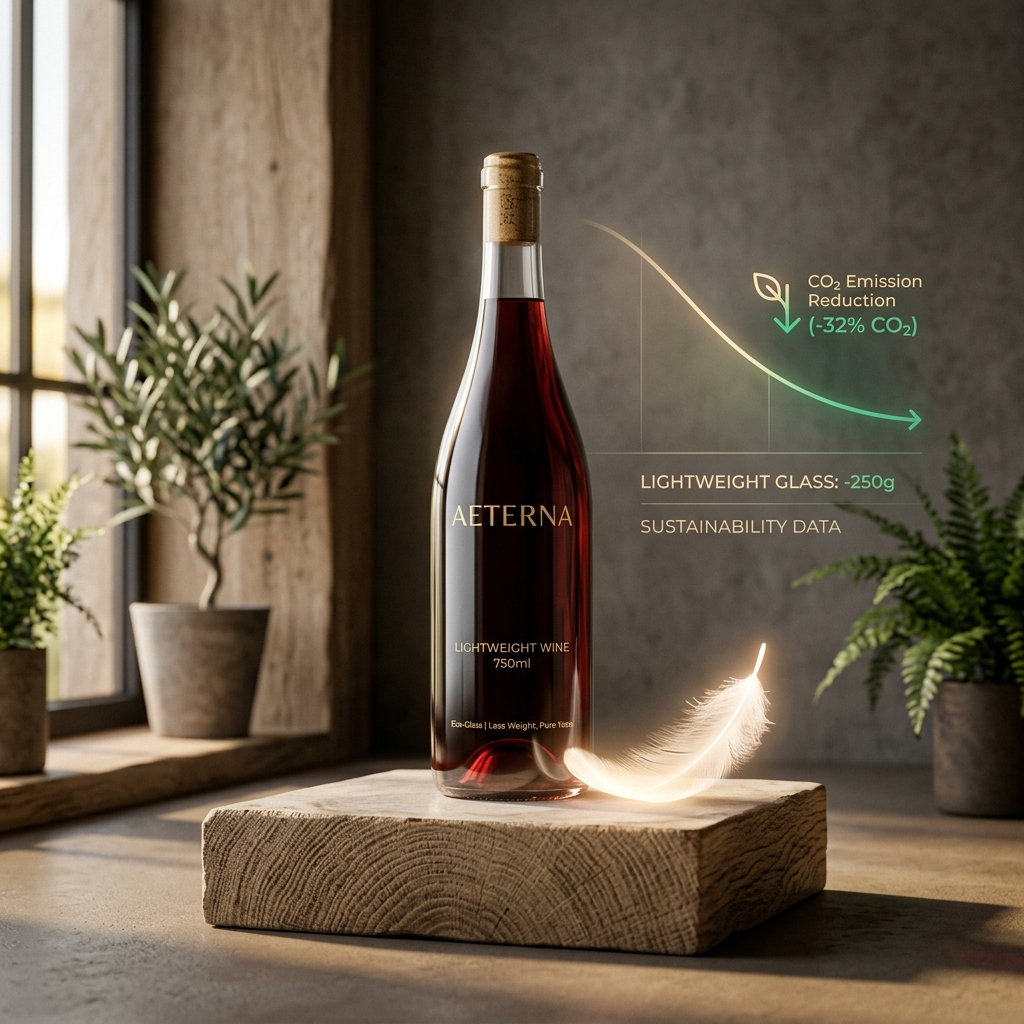
The data supporting this transition is overwhelming. As of early 2026, the average weight among BWA signatories has already plummeted to 430g, with the initiative successfully mitigating nearly 294,000 tonnes of $CO_2$ emissions in 2025 alone. This reduction in carbon footprint is equivalent to the annual emissions of approximately 73,000 households. Beyond environmental metrics, the economic drivers are equally compelling. In the United Kingdom, where Extended Producer Responsibility (EPR) levies penalize packaging based on material weight, the BWA’s weight-reduction strategies have allowed participants to avoid an estimated £58 million in potential fees. Furthermore, the move toward Lightweight Luxury has faced surprisingly little consumer resistance; industry research indicates that bottle weight ranks significantly lower among purchasing cues than previously believed, and no major signatory has reported a decline in sales following a weight reduction.
Technical Engineering: Mastering NNPB for Lightweight Luxury
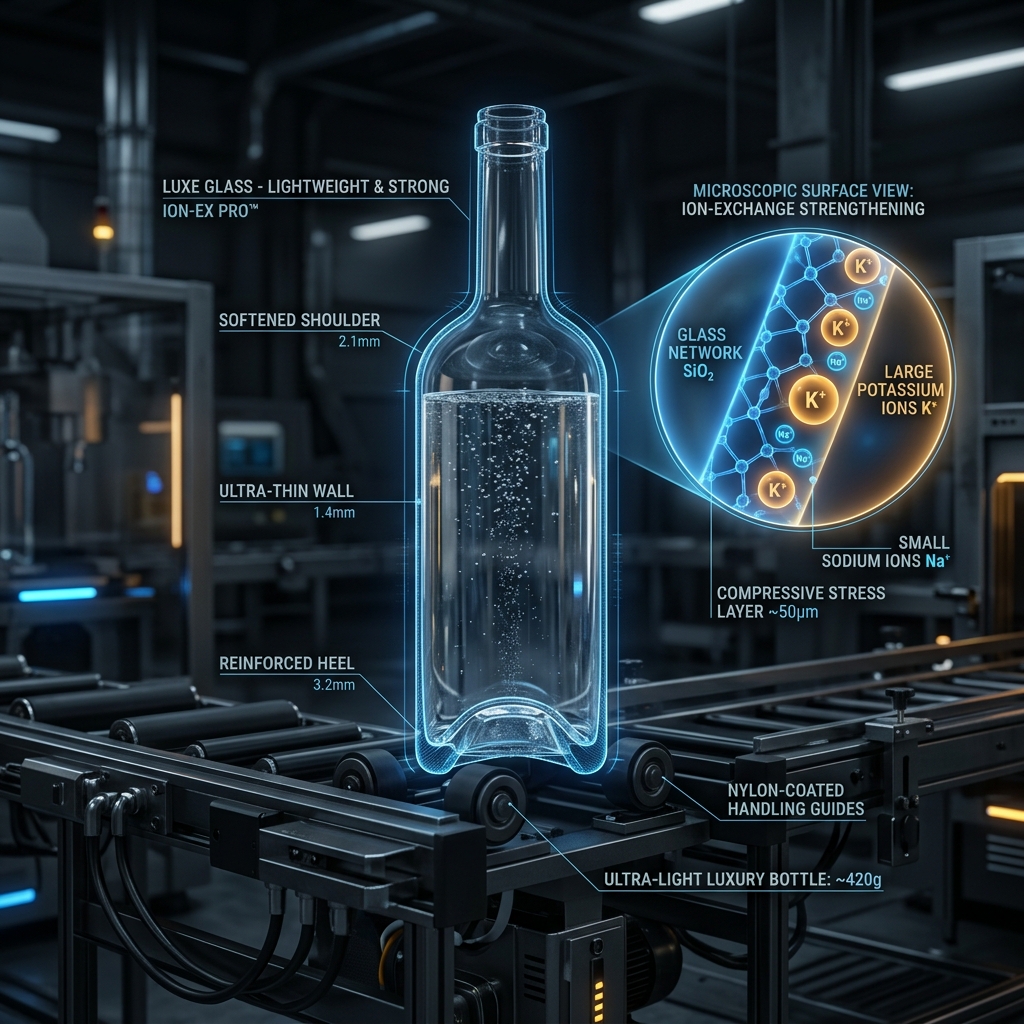
From a professional packaging perspective, achieving Lightweight Luxury is an engineering feat that moves from “material-intensive” to “geometry-intensive” design. The technological prerequisite for this shift is the Narrow Neck Press and Blow (NNPB) forming process. NNPB technology allows for a more homogenous glass thickness distribution compared to traditional blow-and-blow methods, enabling manufacturers to reduce unit weights by up to 20% while maintaining or even improving structural integrity. By mastering the relationship between forming pressure and parison shaping, we can eliminate the “excess glass” traditionally found in the heel and shoulders of premium bottles, redistributing the material to critical stress points to ensure the bottle survives the rigors of high-speed filling lines and global shipping.
However, the transition to Lightweight Luxury introduces specific technical challenges. Thinner glass walls are inherently more susceptible to microfractures and mechanical stress. To mitigate this, manufacturers are adopting chemical strengthening through ion-exchange processes, where smaller sodium ions on the glass surface are replaced by larger potassium ions, creating a layer of compressive stress that significantly increases fracture resistance—sometimes by as much as 15-fold. Additionally, the adoption of “impact-resistant” geometries, such as softened shoulders and reinforced heels, has helped reduce breakage rates in long-haul shipping by an estimated 12%. On the production line, this necessitates a shift to specialized handling equipment, such as nylon-coated starwheels and plastic guides, to prevent glass-on-metal contact that could trigger structural failure in ultra-lightweight formats.
Strategic Roadmaps: Scaling Lightweight Luxury at Shandong Valiant Packaging
For Shandong Valiant Packaging, the rise of Lightweight Luxury represents a unique opportunity to leverage our “one-stop shop” service and advanced “full electricity decorating furnaces” to serve the premium export market. We are currently refocusing our research and development on Platform Silhouettes—core bottle architectures that support multiple SKUs while maintaining the recognizable “hero features” that high-end brands require. By utilizing our subordinate mould department, we can design custom silhouettes that use structural curves and embossed branding to provide the tactile “dopamine moment” consumers expect from luxury packaging, without the unnecessary weight of a heavy base.
To align with the global shift toward Lightweight Luxury, we propose the following strategic recommendations for our international partners:
- Right-Weighting as Brand Narrative: Brands should stop viewing weight reduction as a cost-cutting measure and instead market it as a commitment to “Responsible Luxury.” Utilizing high-recycled-content glass (cullet) further enhances this story, as adding 10% cullet reduces energy use by 3% and carbon emissions by 5%.
- Digital Integration to Replace Mass: As physical weight decreases, “brand real estate” can be expanded through GS1 Digital Link technology. Incorporating NFC tags or QR codes into the label or glass decoration allows for anti-counterfeit verification and provenance storytelling that provides a modern premium experience far exceeding the value of a heavy bottle.
- NNPB Certification for Tier-1 Status: We are accelerating the transition of our high-crystal material lines to NNPB-optimized production. This ensures our clients in North America and Europe can meet the <420g target while satisfying the stringent sustainability audits now required by major retailers.
Conclusion and Outlook
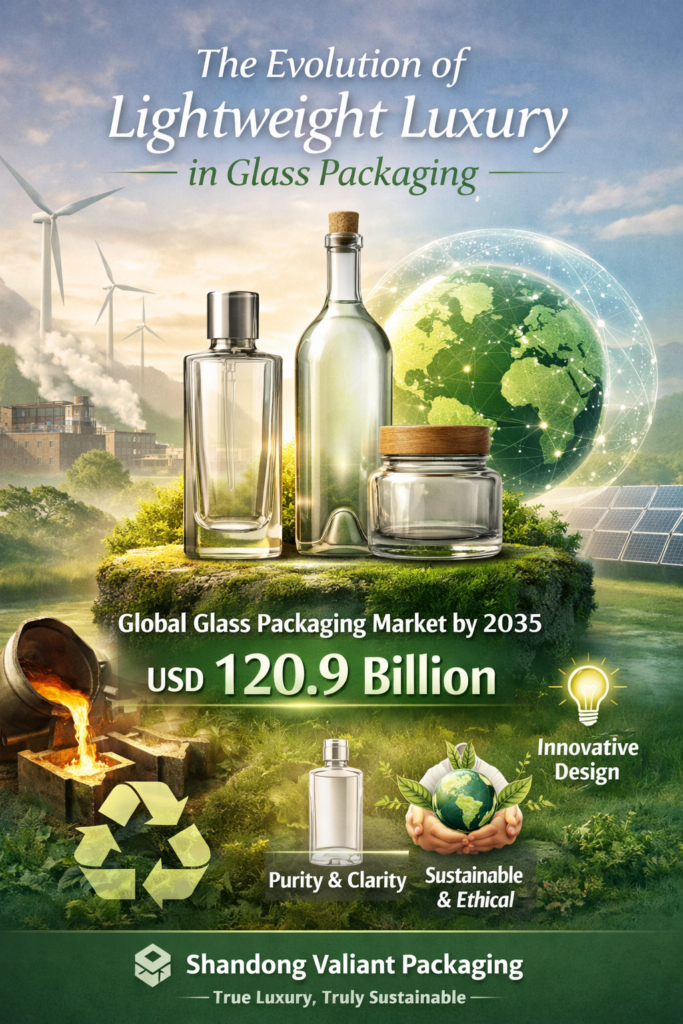
The transition to Lightweight Luxury is not a temporary trend but a permanent structural evolution of the glass industry. By 2035, the global glass packaging market is projected to reach USD 120.9 billion, but growth will be uneven, favoring those who can innovate within the constraints of decarbonization. As the era of the “1kg prestige bottle” ends, the definition of premium will increasingly be found in the intelligence of the design, the clarity of the material, and the ethical footprint of the supply chain. Shandong Valiant Packaging remains committed to leading this charge, delivering packaging solutions that prove true luxury is, above all, sustainable.