
Table of Contents
Meta Description
Lightweight Glass Bottles help beverage and spirits brands reduce transportation expenses, improve logistics efficiency, and lower carbon emissions while maintaining premium packaging quality.
Glass packaging remains the preferred choice for premium spirits, wine, and beverage brands because of its excellent barrier properties, recyclability, and high-end appearance. However, transportation costs continue to rise globally, making packaging weight a critical factor in supply chain management. This is why more manufacturers and brand owners are turning to Lightweight Glass Bottles. By reducing bottle weight without compromising strength or product protection, businesses can significantly lower shipping expenses and improve operational efficiency. Industry studies show that lighter glass packaging can reduce freight costs while also lowering carbon emissions throughout the supply chain.
Why Lightweight Glass Bottles Matter in Modern Logistics
Traditional glass bottles are often designed with thick walls and heavy bases to create a premium appearance. While visually appealing, these designs increase transportation weight and freight expenses. Modern manufacturing technologies such as Narrow Neck Press and Blow (NNPB) allow producers to create Lightweight Glass Bottles with optimized wall distribution and strong structural integrity. This innovation enables weight reductions of up to 30% in some applications while maintaining durability and filling-line performance.
For companies shipping large volumes of spirits or wine internationally, even a small reduction in bottle weight can result in substantial savings over time. When thousands of bottles are loaded into a shipping container, every gram matters.
How Lightweight Glass Bottles Reduce Shipping Costs
The primary advantage of Lightweight Glass Bottles is lower transportation weight. Freight charges for ocean, truck, and rail transportation are heavily influenced by total shipment weight. Lighter bottles allow companies to transport more products within the same weight limits, increasing payload efficiency and reducing shipping costs per unit.
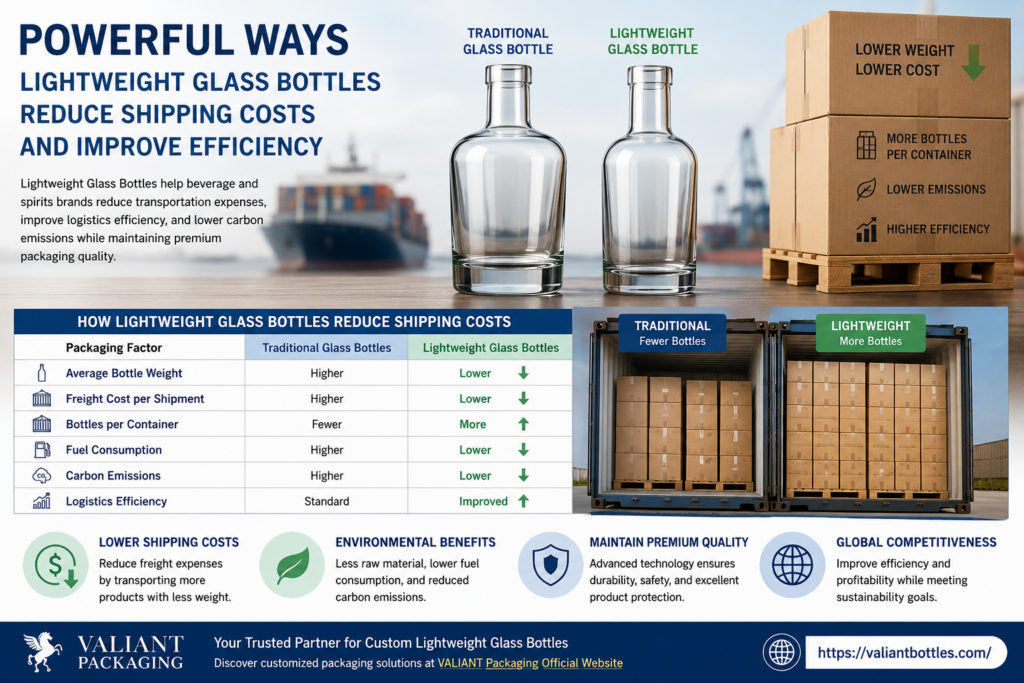
The table below illustrates the potential impact of lightweighting on logistics performance.
| Packaging Factor | Traditional Glass Bottles | Lightweight Glass Bottles |
| Average Bottle Weight | Higher | Lower |
| Freight Cost per Shipment | Higher | Lower |
| Bottles per Container | Fewer | More |
| Fuel Consumption | Higher | Lower |
| Carbon Emissions | Higher | Lower |
| Logistics Efficiency | Standard | Improved |
A reduction of approximately 100 grams per bottle can save more than a ton of shipment weight in a full container load, creating meaningful transportation savings for exporters and beverage brands.
Maintaining Quality While Reducing Weight
Many buyers assume lighter bottles are more fragile. In reality, modern production technologies and surface treatments allow Lightweight Glass Bottles to maintain excellent strength and performance. Manufacturers strategically reduce glass in non-critical areas while reinforcing stress points to ensure durability during filling, storage, and transportation. Extensive testing confirms that lightweight bottles can meet the same quality standards as traditional designs.
Glass also remains one of the safest packaging materials available. According to the Glass Packaging Institute, glass is nonporous, impermeable, and 100% recyclable, making it ideal for preserving product quality and taste.
Sustainability Benefits Beyond Cost Savings
In addition to lowering freight expenses, Lightweight Glass Bottles support sustainability goals. Using less raw material reduces manufacturing energy consumption, while lighter shipments require less fuel during transportation. These benefits help brands reduce their carbon footprint without sacrificing premium packaging appeal. Research indicates that even small reductions in bottle weight can generate significant CO₂ savings across large production volumes.
As governments and consumers place greater emphasis on environmental responsibility, lightweight packaging is becoming an important competitive advantage for beverage brands worldwide.
Partner with VALIANT for Advanced Lightweight Glass Bottles
Companies seeking reliable and cost-effective packaging solutions should consider working with experienced manufacturers that specialize in lightweight glass technology. At VALIANT Packaging Official Website, customers can access customized bottle designs, OEM/ODM services, mold development, closures, and complete one-stop packaging solutions tailored to spirits, wine, and beverage industries.
By choosing Lightweight Glass Bottles, brands can reduce logistics costs, improve sustainability performance, and increase profitability while maintaining the premium appearance consumers expect. As transportation expenses continue to rise, lightweight glass packaging is quickly becoming one of the smartest investments in modern packaging strategy.