
Meta Description:
Discover why heavy bottom glass bottles are the gold standard for premium whiskey and spirits. This guide covers visual premiumization, structural stability, manufacturing crafts (Extra Flint & Annealing), and 2026 industry trends to help brand owners optimize their packaging strategy.
Table of Contents
Introduction: The Psychology of “Weight” in Spirits Packaging
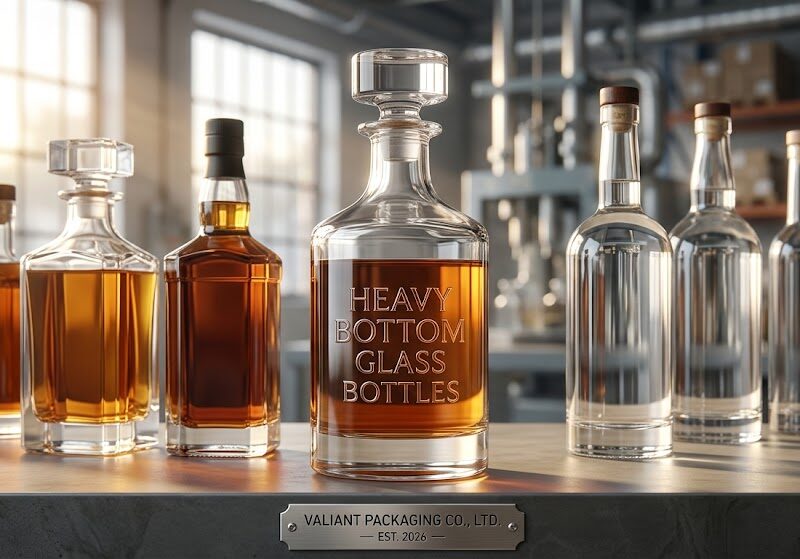
In the world of ultra-premium spirits—specifically Scotch Whisky, Bourbon, and Cognac—the bottle is more than a container; it is a physical manifesto of the brand’s prestige. Heavy Bottom Glass Bottles have become the global standard because they provide an instantaneous “sensory premium.” When a consumer picks up a bottle, the substantial weight in their hand translates directly into a perception of high quality, long aging, and craftsmanship.https://valiantbottles.com/
Heavy Bottom Glass Bottles
Core Advantages: Why the Heavy Base is Irreplaceable
1. Visual Refraction and Liquid Aesthetics
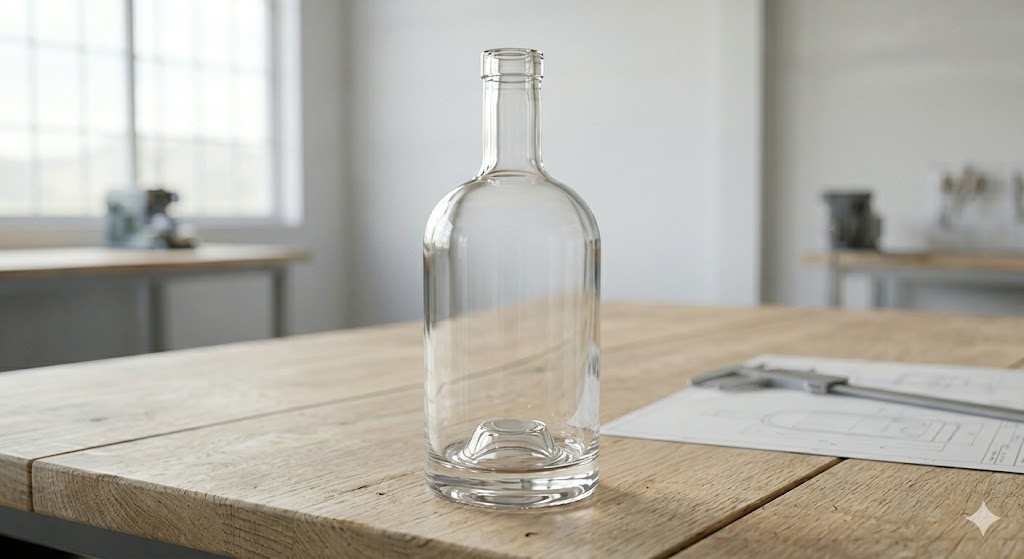
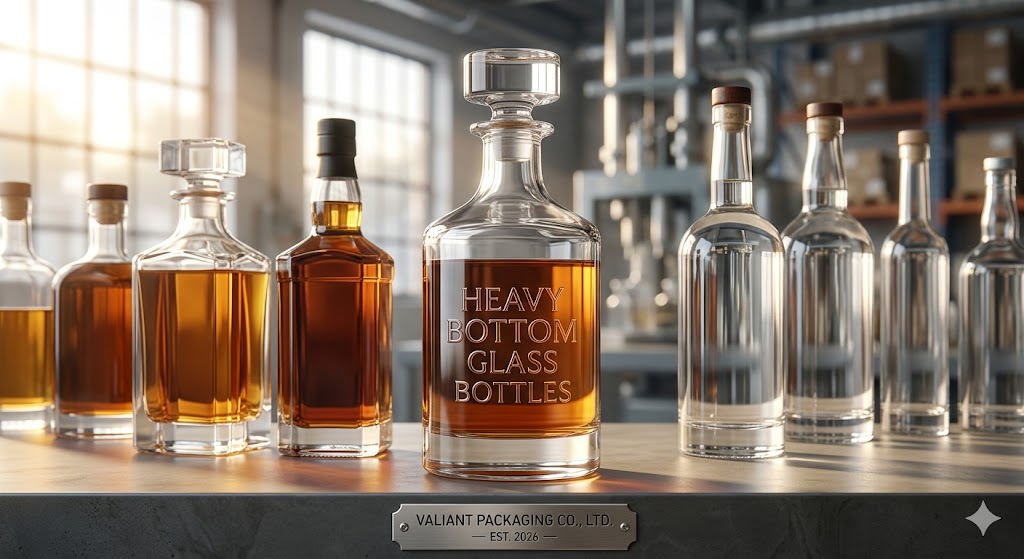
The most striking feature of Heavy Bottom Glass Bottles is the thick glass base, typically ranging from 15mm to 35mm. When paired with Extra Flint Glass, this thick base acts like a prism, capturing and refracting light to make the amber hues of whiskey or the deep mahoganies of brandy appear more vibrant and crystalline.
2. Structural Stability and Low Center of Gravity
Heavy bottom glass bottles are typically paired with Extra Flint Glass. With a base thickness often reaching 15mm to 35mm, this glass acts like a prism, capturing and refracting light. When the spirit is viewed through a thick glass base, the amber hues appear deeper and more dynamic—a visual luxury that thin-based bottles simply cannot replicate.
Manufacturing Excellence: Challenges in Producing Heavy Bases
Producing a high-quality heavy bottom bottle is far more technical than manufacturing standard containers.
Standard soda-lime glass often shows a green or blue tint when the thickness increases. Therefore, top-tier Heavy Bottom Glass Bottles must use Extra Flint glass, where low iron content ensures the base remains perfectly colorless and brilliant.
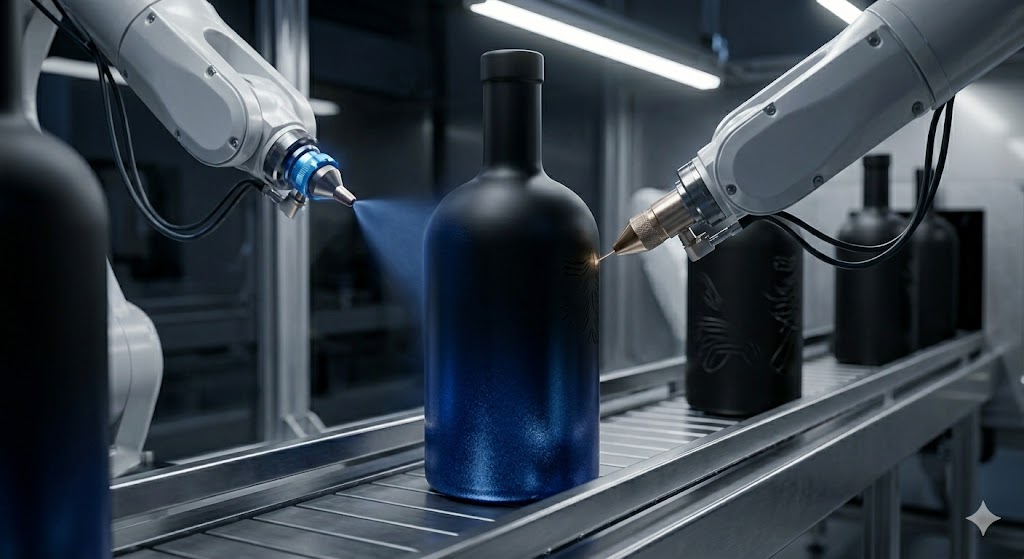
Because the base is extremely thick while the walls remain relatively thin, the cooling process creates significant internal stress. We utilize extended annealing lehrs (ovens) to ensure slow cooling, preventing spontaneous breakage and ensuring the bottle meets international pressure and thermal shock standards.
Specification Comparison: Heavy Base vs. Standard Bottles
| Specification | Standard Spirits Bottle | Heavy Bottom Glass Bottle | Brand Impact |
| Base Thickness | 5mm – 10mm | 15mm – 35mm+ | Maximizes light refraction & luxury feel |
| Average Weight (750ml) | 450g – 600g | 850g – 1250g+ | Instant sensory perception of premium quality |
| Glass Quality | Flint / Super Flint | Extra Flint | Ensures a “water-white” clear base |
| Decoration Compatibility | Basic Spraying/Printing | [Full Decoration Coverage] | Ideal for deep base embossing/engraving |
| Target Market | Mass Market / Budget | Premium / Luxury / Limited | Increases shelf price and brand authority |
In-Depth Analysis: The Evolution of Heavy-Base Design in the Context of Sustainabilitying
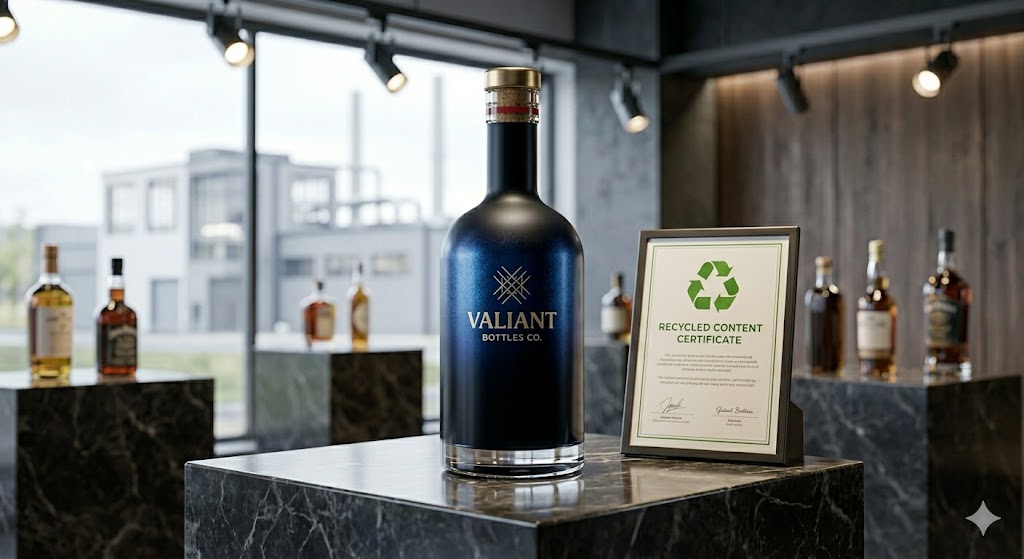
In the global trade landscape of 2026, heavy-bottomed glass bottles are caught in a delicate balancing act between luxury and sustainability. The traditional notion that “heavier equals higher-end” is being redefined by “structural weight reduction.” Leading manufacturers are using simulation software to fine-tune the inner wall curvature while maintaining the visual thickness of the bottle base, thereby reducing raw material consumption and lowering the carbon footprint of logistics. This technological advancement means brands no longer have to choose between brand prestige and ESG (Environmental, Social, and Governance) responsibilities.
For export-oriented wine companies, selecting suppliers of heavy-bottomed bottles that provide carbon footprint reports and utilize light weighting technologies such as NNPB (Narrow-Neck Pressure Blow Molding) not only effectively mitigates cost increases resulting from initiatives like the EU’s CBAM (Carbon Border Adjustment Mechanism) but also serves as a core selling point for the brand’s green transition. In the future, the premium associated with heavy-bottomed bottles will stem not only from their physical weight but also from the technological sophistication and environmental compliance behind them.
Leave a Reply